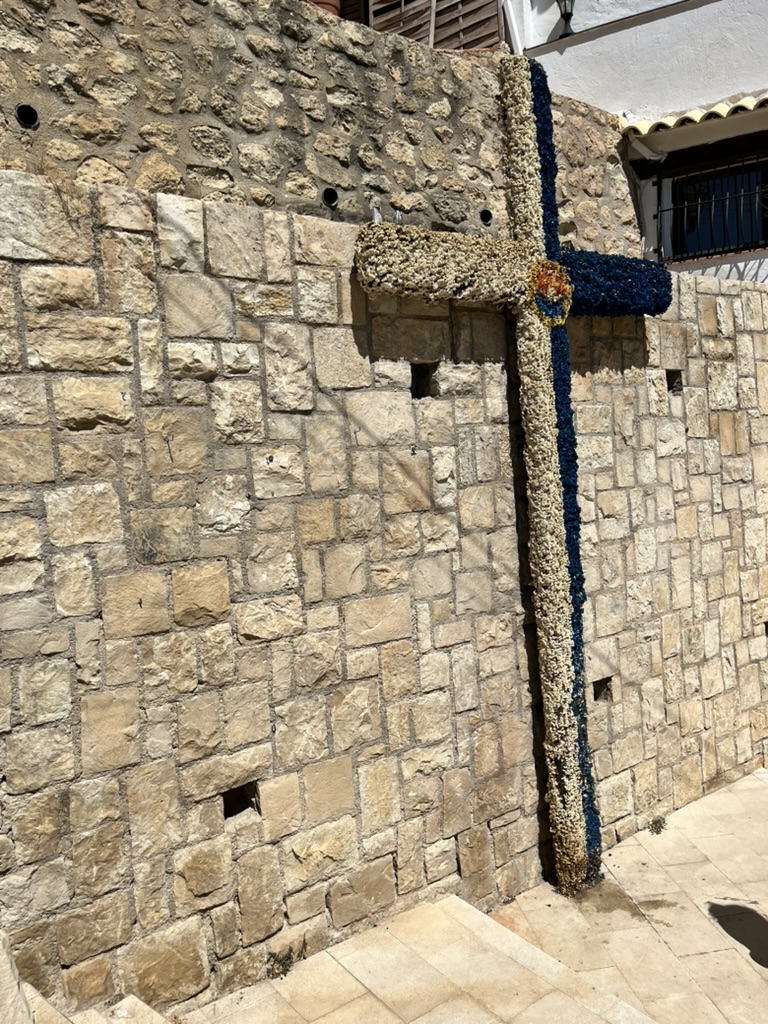
Alicante Old Town Walking Guide 2026: Barrio de Santa Cruz & Hidden Gems
Winding lanes, centuries-old churches, vibrant street art and the best tapas on the Costa Blanca
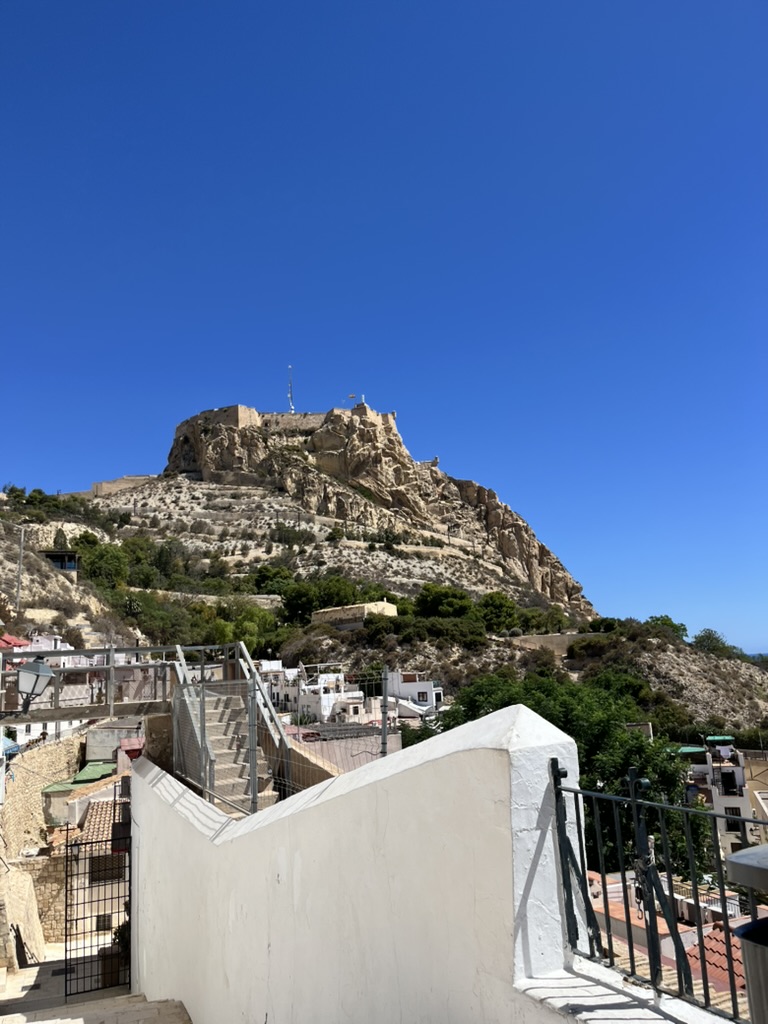
Alicante Old Town (known locally as El Barrio and Barrio de Santa Cruz) is a captivating historic quarter nestled at the foot of Mount Benacantil, directly beneath the imposing Santa Barbara Castle. Two distinct neighbourhoods make up this atmospheric enclave: the whitewashed, flower-draped lanes of Barrio de Santa Cruz climbing the hillside, and the lively El Barrio district below, packed with tapas bars, independent shops and street art. A self-guided walking tour through these ancient streets takes you past 14th-century churches, an elegant Art Nouveau market hall, one of Spain’s most photographed promenades, and dozens of hidden corners that most visitors walk right past. The entire old town is free to explore — all you need is a comfortable pair of shoes and a camera.
Why Visit Alicante Old Town?
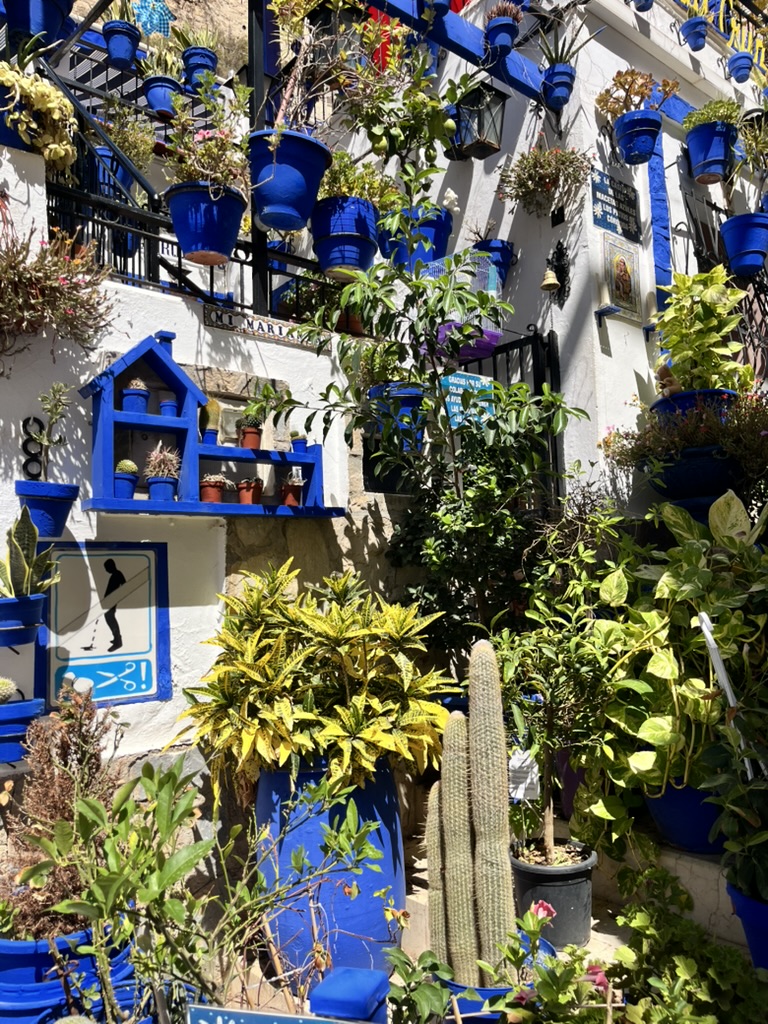
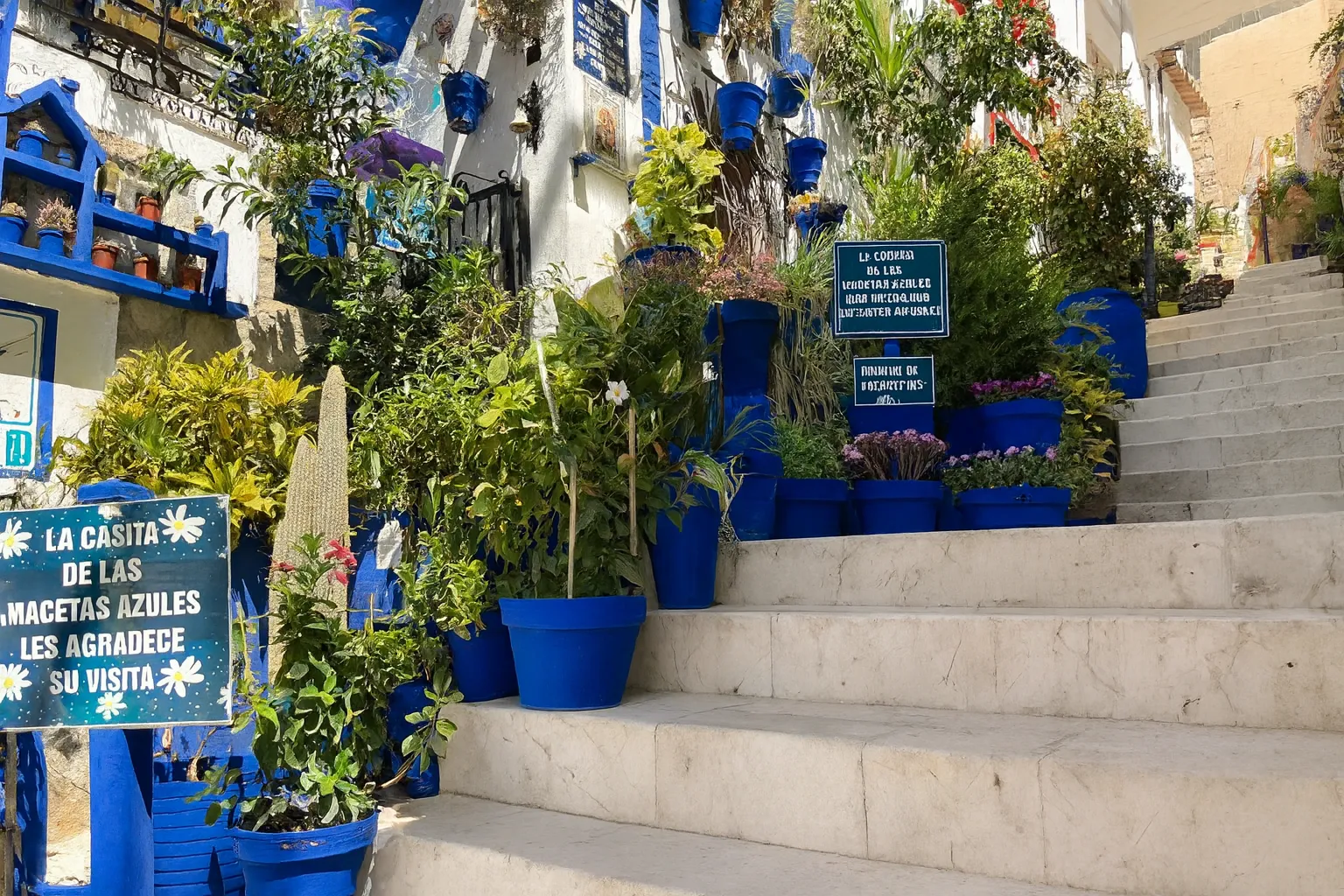
• Barrio de Santa Cruz — Instagram-famous whitewashed lanes with cobalt blue flower pots
• Two historic churches — Basilica Santa María (14th c.) and Concatedral San Nicolás (17th c.)
• Explanada de España — iconic wave-pattern promenade with 6 million marble tiles
• Street art trail — murals and installations hidden in the lanes of El Barrio
• Tapas heaven — some of the best bars on the Costa Blanca at local prices
• 100% free — no tickets needed for any of the main sights
Alicante’s old quarter has undergone a remarkable transformation over the past two decades. What was once a slightly neglected backstreet neighbourhood has blossomed into one of the most charming historic centres on Spain’s Mediterranean coast, without losing its authentic local character. Unlike some over-touristed old towns, Barrio de Santa Cruz remains a genuine residential area where elderly neighbours chat on doorsteps, laundry dries between balconies, and cats doze on sun-warmed tiles. The old town sits just 15 km from our apartment in Gran Alacant, roughly 20 minutes by car via the N-332, making it a perfect half-day or full-day excursion. Combine it with a visit to Santa Barbara Castle for an unforgettable day of history, photography and gastronomy.
What Is the History Behind Alicante’s Old Quarter?
The history of Alicante’s old town stretches back over a thousand years to the Moorish settlement of Al-Laqant, which grew around the harbour beneath the hilltop fortress. After the Christian Reconquista in 1248, the medieval city expanded outwards from the castle slopes, creating the dense network of narrow streets you walk through today. The oldest surviving buildings date from the 14th century, including the Basilica of Santa María, which was constructed on the foundations of a mosque.
During the 17th century, Alicante prospered as a major Mediterranean trading port, and wealthy merchant families built the grand townhouses that line streets like Calle Mayor and Calle Labradores. The Concatedral de San Nicolás was completed in 1662, bringing Renaissance elegance to the neighbourhood. The 19th century saw the construction of the Explanada promenade and Mercado Central, transforming the waterfront into a stylish civic space.
By the mid-20th century, many residents had moved to newer districts and parts of the old town fell into disrepair. A sustained restoration programme beginning in the 1990s brought Barrio de Santa Cruz back to life, with freshly whitewashed facades, colourful ceramic tiles, and the now-famous blue flower pots that have become the neighbourhood’s signature. Today, the old town is a thriving blend of history, culture, gastronomy and nightlife.
What Is the Best Walking Route Through Alicante Old Town?
This self-guided walking route covers all the major highlights of the old town in a logical loop that minimises backtracking. The full circuit is approximately 2.5 kilometres and takes 2.5 to 4 hours depending on how long you linger at each stop. Start in the morning when the light is best for photography and the streets are still relatively quiet.
Old Town Walking Route — 7 Stops
Explanada de España (Start Point)
Begin your walk on Alicante’s most famous promenade, a 500-metre boulevard paved with over 6 million colourful marble tiles arranged in a mesmerising wave pattern. The Explanada runs parallel to the harbour, lined with palm trees, open-air cafes and artisan stalls. Take a moment to admire the pattern from above — the best perspective is from the elevated terrace near the port end. On summer evenings, this is where locals gather for their paseo (evening stroll), and live musicians often perform near the bandstand.
Concatedral de San Nicolás de Bari
Walk inland along Calle San Nicolás to reach the city’s co-cathedral, a stunning 17th-century Renaissance church built between 1616 and 1662 on the site of an earlier Gothic temple. The exterior is relatively plain, but step inside and look up: the soaring 45-metre dome, finished in blue ceramic tiles, floods the nave with soft light. The austere cloister is one of the most peaceful spots in the old town. Entry is free, and the church is open Monday to Saturday from 07:30 to 12:30 and 17:30 to 19:30. Respect the dress code — shoulders and knees should be covered.
Plaza del Ayuntamiento (Town Hall Square)
Continue along Calle Mayor to this elegant Baroque square dominated by the 18th-century Town Hall (Ayuntamiento). The building’s ornate facade features twin towers and a ground-floor colonnade where a brass plaque marks the official sea-level reference point for all of Spain. The square is surrounded by terrace cafes — grab a coffee and watch the world go by. On Saturdays, street performers and buskers often set up here. The tapas bars on the surrounding streets are some of the best in the city.
Basilica of Santa María
Head north along Calle Villavieja to find Alicante’s oldest church, built in the 14th–16th century over the main mosque of the former Moorish city. The Baroque facade from the 18th century features an impressive portal flanked by slender columns and a statue of the Virgin. Inside, the single Gothic nave is remarkably atmospheric, with 15th-century frescoes, a gilded Rococo altarpiece, and a Renaissance baptismal font. The church’s elevated position at the edge of Barrio de Santa Cruz gives you your first taste of the hillside quarter’s charm. Free entry; open mornings and late afternoons.
Barrio de Santa Cruz
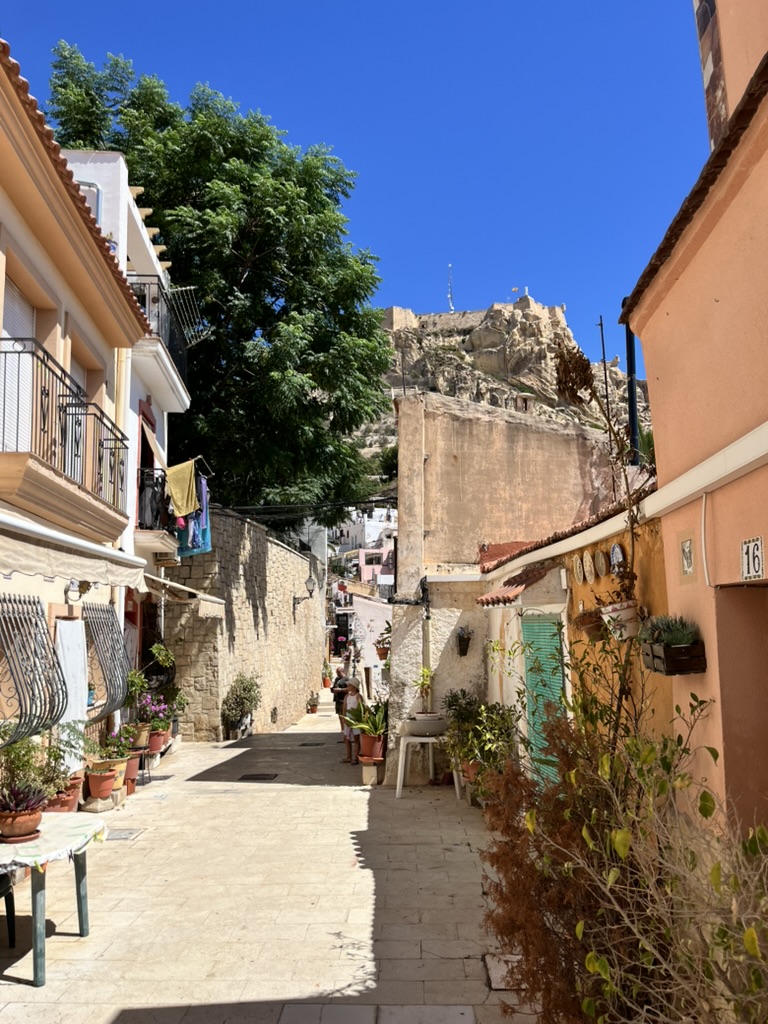
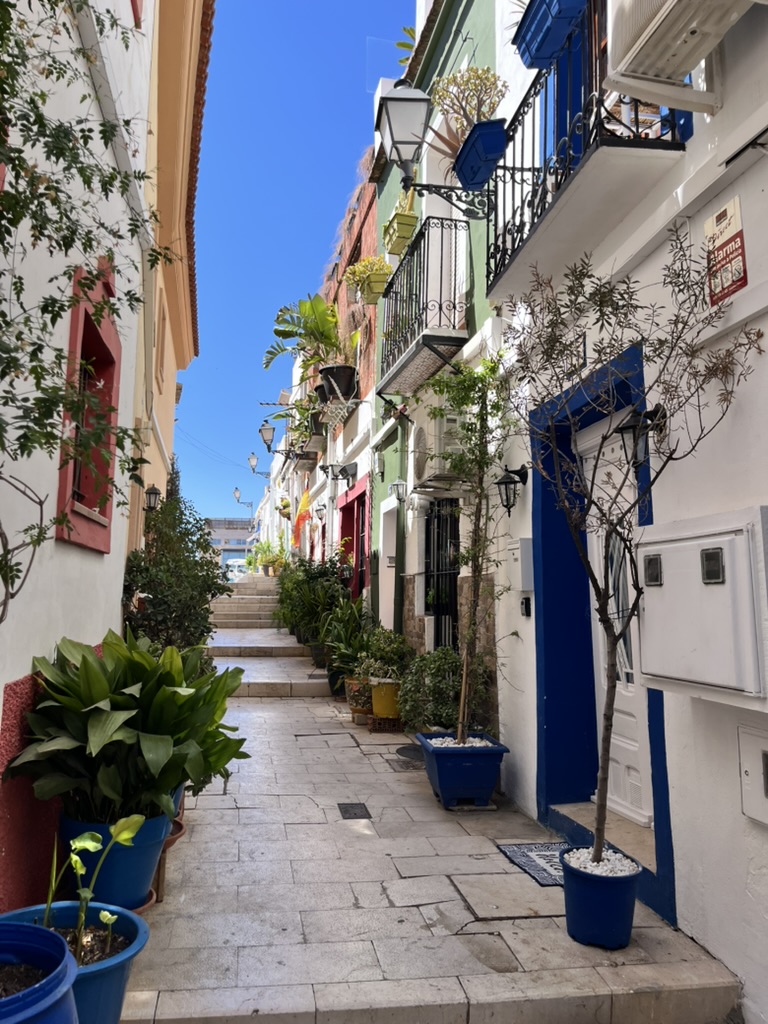
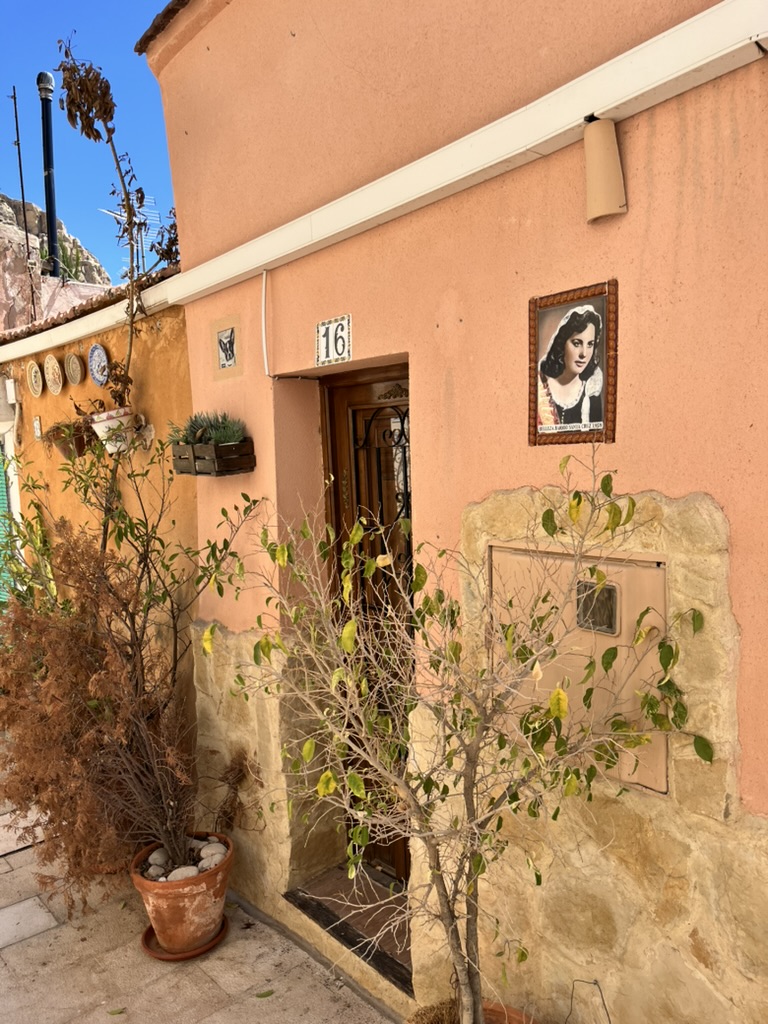
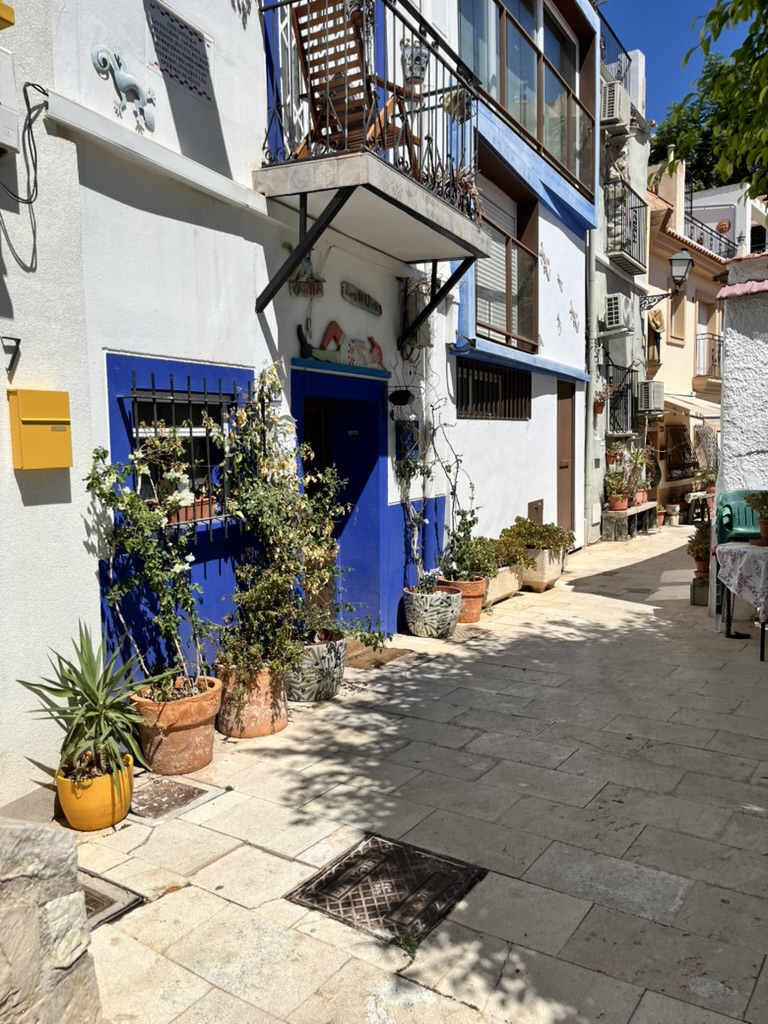
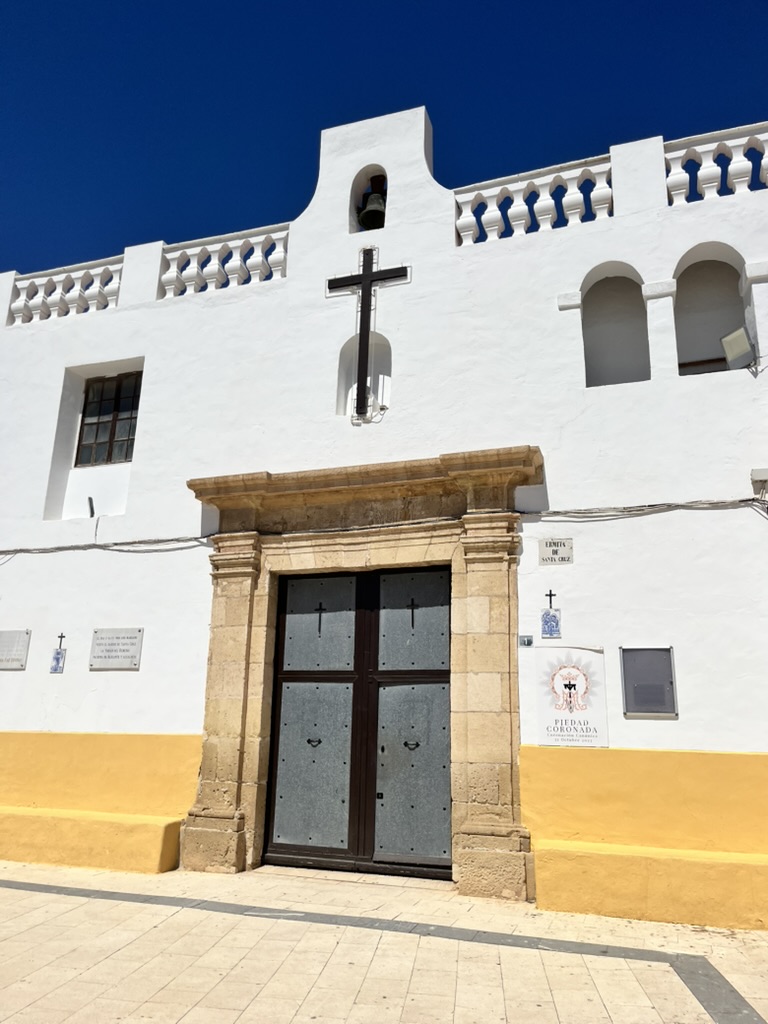
From the Basilica, climb the steep narrow lanes into the heart of Alicante’s most photogenic neighbourhood. Whitewashed houses with cobalt blue shutters and flower pots cascade down the hillside, connected by stone stairways, tiny plazas and arched passageways. Bougainvillea and jasmine spill over walls, filling the air with fragrance. The best streets to explore include Calle San Rafael, Calle del Pozo, and the steps leading up towards Ermita de Santa Cruz. Allow at least 30–45 minutes to wander — the magic of this quarter is in getting pleasantly lost. If you want to continue uphill, the lanes eventually connect to one of the walking routes up to Santa Barbara Castle.
MACA Museum & El Barrio Street Art Trail
Descend back to the lower old town and visit MACA (Museo de Arte Contemporáneo de Alicante), housed in a beautifully restored 17th-century building. The permanent collection includes works by Dalí, Miró, Picasso and Chillida — all free of charge. From MACA, explore the street art scattered through the lanes of El Barrio. Look for large-scale murals on Calle Castaos, Calle Labradores and around Plaza del Carmen. The artworks range from photorealistic portraits to abstract geometric designs, and new pieces appear regularly as part of the city’s ongoing urban art programme. This is also the nightlife district, so note the bar locations for your evening return.
Mercado Central (End Point)
Finish your walk at Mercado Central, Alicante’s beautiful Art Nouveau market hall dating from 1921. Two floors of stalls overflow with glistening fresh fish, enormous prawns, wheels of Manchego cheese, barrels of olives, strings of dried peppers and pyramids of seasonal fruit. The ground floor is dedicated to seafood and meat, while the upper gallery houses delicatessens, spice shops and a handful of small tapas counters where you can eat standing at the bar like a local. The market is open Monday to Saturday from 07:00 to 14:30. Arrive before noon for the fullest selection.
What Are the Key Landmarks Worth Visiting?
Basilica of Santa María
The oldest active church in Alicante dates from the 14th century and was built in the Valencian Gothic style over the site of the city’s former main mosque. Its Baroque facade was added in the 18th century and features elaborate carvings and a striking portal. The single-nave interior houses a magnificent gilded Rococo high altar, 15th-century chapels with original frescoes, and a Renaissance baptismal font. The church sits at the boundary between the lower old town and Barrio de Santa Cruz, making it a natural transition point on your walking route.
Free entry • Open mornings & late afternoons • Dress code applies
Concatedral de San Nicolás de Bari
This impressive Renaissance co-cathedral was built between 1616 and 1662 to designs by Agustín Bernardino. The understated exterior gives no hint of the soaring interior, where a 45-metre blue-tiled dome creates an extraordinary sense of space and light. The Baroque Communion Chapel is considered one of the finest examples of its type in the Valencian Community. The tranquil cloister, with its arched galleries and central garden, provides a welcome retreat from the bustling streets outside. The cathedral is named after Saint Nicholas of Bari, patron saint of Alicante, whose feast day on 6 December is celebrated with processions through the old town.
Free entry • Mon–Sat 07:30–12:30 & 17:30–19:30 • Cloister open during services
Barrio de Santa Cruz
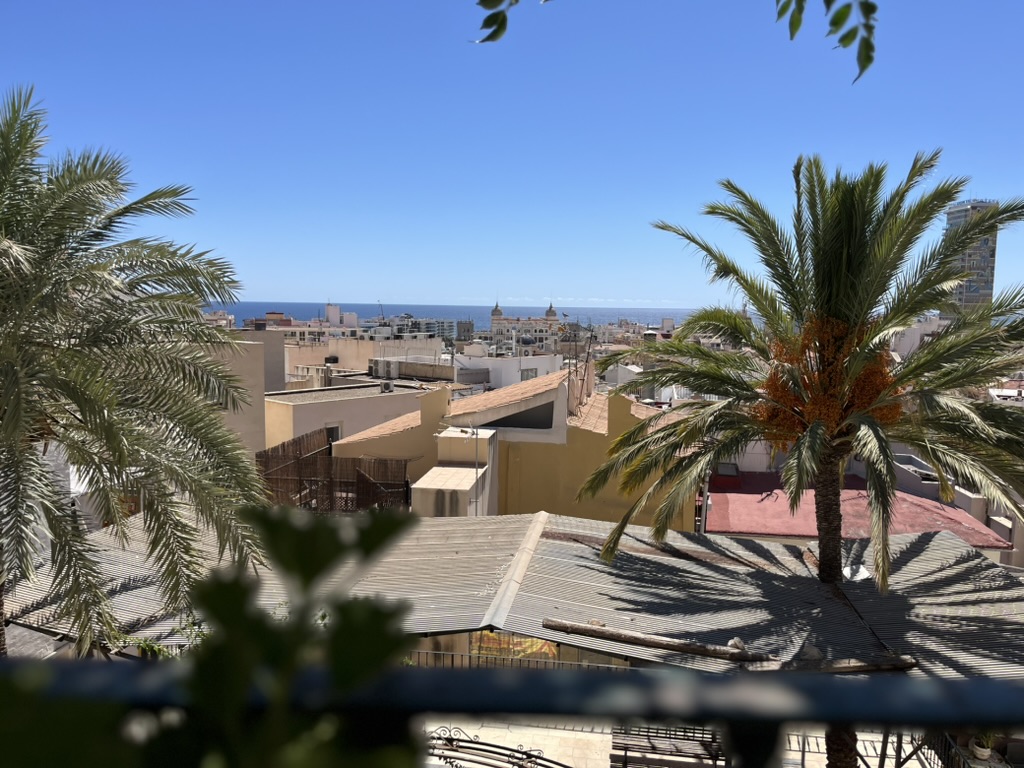
This hillside residential quarter climbing the slopes of Mount Benacantil is the most photographed corner of Alicante. Whitewashed houses with brightly painted shutters — predominantly cobalt blue but also green, yellow and terracotta — line steep stairways and winding lanes barely wide enough for two people to pass. Ceramic flower pots overflow with geraniums, trailing ivy and bougainvillea, creating a riot of colour against the white walls. The neighbourhood was carefully restored in the 2000s and today strikes a perfect balance between tourist appeal and genuine residential life. The higher you climb, the better the views, eventually reaching the Ermita de Santa Cruz viewpoint with its panorama over the harbour and old town rooftops.
Open access 24/7 • Best light: morning or golden hour • Wear comfortable shoes
Explanada de España
Alicante’s signature promenade runs for 500 metres along the harbour between the port and Canalejas Park. The pavement is composed of 6.6 million tricolour marble tiles (red from Alicante, cream from Novelda, dark blue from the Basque Country) arranged in the famous undulating wave pattern that has become the city’s unofficial symbol. Rows of towering Washingtonia palm trees provide shade, and both sides are lined with terrace cafes, artisan stalls selling jewellery and leatherwork, and seasonal market kiosks. In the evening, the Explanada transforms into Alicante’s social hub, with families, couples and groups of friends strolling under the warm glow of ornate street lamps. This is the place to be as the sun sets over the harbour.
Open 24/7 • Best at sunset & after dark • Live music in summer
Where Are the Best Tapas Bars in the Old Town?
One of the greatest pleasures of visiting Alicante Old Town is eating your way through the neighbourhood’s tapas bars. The best spots are clustered around Plaza del Ayuntamiento, along Calle Labradores, and in the lanes of El Barrio. Prices are very reasonable — expect to pay €3–8 per tapa and €15–25 for a generous lunch with wine.
Nou Manolín
An Alicante institution since 1972, famous for its downstairs pintxos bar where glass displays overflow with freshly prepared seafood tapas, croquetas, and montaditos. The upstairs restaurant serves exceptional rice dishes and grilled fish. Locals and tourists queue here daily — arrive before 13:30 to avoid the longest waits.
Calle Villegas 3 • Mon–Sat lunch & dinner • €€
El Portal Taberna & Wines
A modern tapas bar with a creative twist, using seasonal local ingredients to produce dishes like grilled octopus with sweet smoked paprika, tuna tataki with wakame, and slow-cooked pork cheeks. The wine list focuses on Spanish boutique producers, and the staff are happy to recommend pairings.
Calle Bilbao 2 • Tue–Sat lunch & dinner • €€
Cervecería Sento
A neighbourhood favourite near the town hall with an excellent selection of craft beers and classic Spanish bar food. Their croquetas de jamón ibérico are legendary, and the patatas bravas with spicy alioli are among the best in the city. Friendly service and a lively atmosphere, especially on Friday evenings.
Near Plaza del Ayuntamiento • Daily lunch & dinner • €
Taberna Iberia
A hidden gem on Calle Lonja de Caballeros where the daily menu changes based on whatever arrived fresh at Mercado Central that morning. The chalkboard specials might include grilled sardines, clams in white wine, or seasonal vegetable fritters. Packed with locals at lunchtime, which is always a good sign.
Calle Lonja de Caballeros • Mon–Sat lunch • €
Local tip: The traditional Alicante rice dish you must try is arroz a banda — rice cooked in a rich fish stock, served with a side of alioli garlic mayonnaise. For dessert, order helado de turrón(nougat ice cream), a local speciality unique to the Alicante province.
Where Can You Find the Street Art Trail in El Barrio?
Alicante’s old town has quietly become one of the best street art destinations on Spain’s Mediterranean coast. The El Barrio district, which doubles as the nightlife quarter after dark, is home to dozens of murals, stencils and installations created by local and international artists. The city council actively encourages urban art through regular commissions and an annual street art festival that adds new works each year.
• Calle Castaos — The unofficial “gallery street” with the highest concentration of large-scale murals, including a photorealistic portrait spanning an entire building facade and an abstract geometric piece visible from the parallel streets.
• Calle Labradores — A mix of smaller stencil works, paste-ups and painted shutters that transform this commercial street into an open-air museum after the shops close.
• Plaza del Carmen — The informal heart of El Barrio, where cafe terraces sit beneath colourful wall art and local artists sometimes work in the open.
• Calle San Pascual — Look up to spot smaller installations, hanging art pieces and decorated balconies that are easy to miss if you’re not paying attention.
The street art changes regularly, so each visit reveals something new. For the most up-to-date map, check the Alicante Turismo website or ask at the tourist office on Plaza del Ayuntamiento.
What Is the Explanada Like in the Evening?
If you only have time for one evening activity in Alicante, make it a stroll along the Explanada de España after sunset. The promenade takes on an entirely different character once the sun goes down. The ornate cast-iron street lamps bathe the marble tiles in warm golden light, the palm trees rustle in the sea breeze, and hundreds of locals and visitors fill the boulevard for the nightly paseo.
What you will find
- • Open-air cafe terraces with harbour views
- • Artisan jewellery and craft stalls
- • Live music at the bandstand (summer)
- • Portrait artists and caricaturists
- • Ice cream vendors and churrerías
Best timing
- • Summer: 20:00–midnight is prime time
- • Spring/Autumn: 19:00–22:00 is ideal
- • Winter: 17:00–20:00 before it gets cool
- • Sunset views face west toward the marina
- • Friday & Saturday are the liveliest evenings
What Are the Best Photo Spots in the Old Town?
Top 6 Instagram Spots
Blue Flower Pot Stairs of Santa Cruz
The most iconic shot in the old town. Find the steep stairway on Calle San Rafael lined with cobalt blue ceramic pots overflowing with red geraniums. Best light: 09:00–11:00.
Ermita de Santa Cruz Viewpoint
The small chapel at the top of Barrio de Santa Cruz offers a sweeping panorama over the old town rooftops, the harbour and the Mediterranean. Perfect for golden hour.
Explanada Wave Pattern from Above
The marble tile waves are best photographed from the elevated terrace at the port end of the promenade, where the full pattern is visible stretching into the distance.
Basilica Santa María Facade
The ornate Baroque portal framed by the narrow street creates a dramatic composition. Shoot from across the small plaza for the best angle including the bell tower.
El Barrio Street Art Walls
The murals on Calle Castaos make for colourful backdrops. Visit early morning when the streets are empty and there is no one blocking the walls.
Concatedral Blue Dome Interior
Look straight up at the 45-metre dome from the centre of the nave. The blue tiles and circular windows create a stunning symmetrical composition.
What Practical Information Do You Need Before Visiting?
Getting There
By car from Gran Alacant: 15 km via N-332, approximately 20 minutes
Parking: Parking Explanada or Parking Puerto (€1.50–2.50/hour)
By tram (TRAM): Lines L1, L2 or L3 to Luceros station, then 5 min walk
From cruise port: 800m flat walk along the waterfront (10–15 min)
By bus (TAM): Multiple city lines stop near Mercado Central
When to Visit
Best months: April–May and September–October (pleasant temperatures, fewer crowds)
Best time of day: Morning 09:00–12:00 or late afternoon 17:00–20:00
Avoid: 13:00–17:00 in summer (extreme heat, siesta closures)
Summer evenings: The Explanada is magical after 20:00
Rainy days: Even rare rain adds atmospheric reflections to the tile streets
Costs & Budget
Walking the old town: Free
Church entry: Free (both Basilica & Concatedral)
MACA Museum: Free
Tapas lunch for two: €25–45 including drinks
Parking (3 hours): €5–8
Total half-day budget: €30–55 per couple
Tips & Essentials
Footwear: Wear comfortable walking shoes — streets are steep and cobbled
Water: Carry a bottle, especially in summer — fountains are scarce
Sun protection: Hat, sunscreen and sunglasses are essential May–September
Language: Most bar and restaurant staff speak basic English
Cash: Carry some cash for small tapas bars; most accept cards
Important Notes
• Siesta hours: Many shops and some restaurants close between 14:00 and 17:00 — plan accordingly
• Church dress code: Cover shoulders and knees when entering churches
• Mercado Central hours: Open Mon–Sat 07:00–14:30 only — closed Sundays
• Steep terrain: Barrio de Santa Cruz involves significant uphill walking — not ideal for wheelchair users
• Pickpockets: Keep valuables secure in crowded areas, especially on the Explanada and at the market
• Noise at night: El Barrio gets loud on weekend nights — if staying nearby, bring earplugs
How Can You Combine the Old Town with Santa Barbara Castle?
The old town and Santa Barbara Castle are natural companions for a full-day Alicante experience. The most scenic connection is walking up through Barrio de Santa Cruz — the steep lanes eventually lead to one of the three free walking routes to the castle summit. Here is a suggested schedule:
09:30 — Start at Explanada de España, walk to Concatedral San Nicolás
10:30 — Explore Plaza del Ayuntamiento and Basilica Santa María
11:00 — Wander through Barrio de Santa Cruz, then walk up to the castle
12:00 — Explore Santa Barbara Castle and enjoy the panoramic views
13:30 — Take the elevator down to Postiguet Beach (€2.70)
14:00 — Tapas lunch in the old town — try Nou Manolín or El Portal
15:30 — Browse Mercado Central and the El Barrio street art trail
Evening — Return for dinner on the Explanada or in El Barrio
Czytasz po polsku? This article is also available in Polish: Stare Miasto Alicante — Barrio Santa Cruz i El Barrio

Rafał Prońko
Właściciel Brisa Alacant
Właściciel apartamentu wakacyjnego Brisa Alacant od 2023 roku, regularnie odwiedzam Costa Blanca i znam region z własnych doświadczeń. Wszystkie miejsca opisane na blogu odwiedziłem osobiście — zdjęcia i porady pochodzą z moich własnych wizyt. Pomagam gościom odkrywać najlepsze atrakcje regionu Alicante.
Frequently Asked Questions About Alicante Old Town
What are the must-see sights in Alicante Old Town?
The must-see sights in Alicante Old Town include Barrio de Santa Cruz, a charming hillside quarter with whitewashed houses adorned with bright blue flower pots and cascading bougainvillea that leads up towards Santa Barbara Castle. The 14th-century Basilica of Santa Maria is the oldest active church in the city, built over the ruins of a mosque after the Reconquista, featuring a striking Baroque facade and a serene Gothic interior. Concatedral de San Nicolas de Bari, dating from the 17th century, impresses visitors with its 45-metre-high blue-tiled dome and austere Renaissance cloister. The Explanada de Espana promenade stretches along the harbour with over six million colourful marble tiles arranged in a distinctive wave pattern. Mercado Central, the elegant Art Nouveau market hall from 1921, is a food lover paradise where you can sample fresh seafood, local cheeses, olives and cured meats. The MACA contemporary art museum, housed in a 17th-century granary, rounds out a perfect half-day walking tour of this historic Mediterranean quarter.
How much time do you need to explore Alicante Old Town?
Plan between two and a half and four hours for a thorough exploration of Alicante Old Town, depending on your pace and how many stops you make along the way. A brisk walk covering only the main landmarks such as Barrio de Santa Cruz, the Basilica of Santa Maria, and the Explanada promenade can be completed in around ninety minutes, but you would miss much of the neighbourhood charm. Adding a visit to Mercado Central for tastings, browsing the street art trail in El Barrio, and stopping at a tapas bar or two extends the experience to a comfortable three-hour outing. Photography enthusiasts and history buffs should budget closer to four hours, particularly if they want to explore the quiet back alleys of Santa Cruz where every corner reveals another picture-perfect scene. If you also plan to walk up to Santa Barbara Castle from the old town, add another sixty to ninety minutes for the ascent, castle visit and descent. The ideal strategy is to start mid-morning, explore through lunch, and finish on the Explanada for an early evening drink.
Where are the best tapas bars in Alicante Old Town?
The best tapas bars in Alicante Old Town are concentrated around two areas: the streets surrounding Plaza del Ayuntamiento and the lively lanes of El Barrio nightlife district. Nou Manolin on Calle Villegas is a legendary institution that has served exceptional seafood tapas and rice dishes since 1972, with a downstairs bar for casual pintxos and a formal dining room upstairs. El Portal Taberna on Calle Bilbao offers creative modern tapas using locally sourced ingredients, including their signature grilled octopus with smoked paprika. Cerveceria Sento near the town hall serves outstanding craft beer alongside traditional croquetas, patatas bravas and jamon iberico. For a more local experience away from the tourist trail, try Taberna Iberia on Calle Lonja de Caballeros, where the daily changing chalkboard menu features whatever arrived fresh at the nearby Mercado Central that morning. Budget around three to eight euros per tapa and fifteen to twenty-five euros for a generous lunch with wine.
How do you get to Alicante Old Town from the cruise port?
Getting to Alicante Old Town from the cruise port is straightforward as the two are practically neighbours. The cruise terminal sits at the eastern end of the harbour, and from there it is a flat, pleasant walk of roughly 800 metres along the waterfront promenade to reach the Explanada de Espana, which marks the southern boundary of the old town. The walk takes about ten to fifteen minutes at a leisurely pace, following the palm-lined port boulevard past restaurants, shops and marina berths. No bus or taxi is necessary unless you have mobility challenges, in which case a taxi from the terminal to Plaza del Ayuntamiento in the heart of the old town costs approximately five to seven euros. Cruise ships docking at the outer mole have a free shuttle bus provided by the port authority that drops passengers at the terminal building, from which you begin the short waterfront walk. For passengers arriving from Gran Alacant by car, the nearest parking garages are Parking Explanada and Parking Puerto, both charging around 1.80 euros per hour.
Is Alicante Old Town safe to visit at night?
Alicante Old Town is generally safe to visit at night, particularly along the main thoroughfares and the well-lit Explanada de Espana promenade which remains busy with locals and visitors until well past midnight during the summer months. Barrio de Santa Cruz is a residential neighbourhood that is quiet and peaceful after dark, with occasional street cats being the most common encounter. The El Barrio district transforms into the heart of Alicante nightlife from Thursday through Saturday, with dozens of bars and music venues filling the narrow streets with energy and crowds. This lively atmosphere means there is safety in numbers and a visible police presence throughout the weekend evenings. Standard travel precautions apply everywhere: keep valuables close, avoid displaying expensive jewellery or electronics openly, and stay on well-lit streets. The local Policia Municipal regularly patrols the area and there are municipal CCTV cameras throughout the old town. Overall, Alicante has lower crime rates than many comparable European tourist cities, and most visitors report feeling comfortable walking the old quarter well into the evening hours.
Źródła i odnośniki
- Alicante Turismo - Official Tourism Portal of Alicante(dostęp: 2026-05-10)
- Alicante City Council - Barrio de Santa Cruz Heritage Information(dostęp: 2026-05-10)
- TripAdvisor - Casco Antiguo de Alicante Reviews(dostęp: 2026-05-10)
- Comunitat Valenciana Tourism - Alicante Old Town Guide(dostęp: 2026-05-10)
- Spain.info - Concatedral de San Nicolas de Bari(dostęp: 2026-05-10)
More to explore near Alicante Old Town
The old town is a perfect starting point for further adventures in Alicante. Walk up through Barrio de Santa Cruz to reach Santa Barbara Castle with its free entry and breathtaking 360-degree views from 166 metres above the city. Food lovers should not miss Mercado Central for the freshest seafood, local cheeses and artisan products. And for the Polish-language version of this guide with additional local tips, visit our Stare Miasto Alicante article.
Stay in Gran Alacant — Your Perfect Base for Exploring Alicante
Our apartment in Gran Alacant is just 20 minutes from Alicante Old Town, giving you the best of both worlds: a quiet residential neighbourhood with a swimming pool and sea views, plus easy access to all the cultural treasures of the Costa Blanca capital. After a full day exploring cobbled lanes and sampling tapas, come back to relax on your private terrace or take a sunset walk on nearby Carabassi Beach.
20 min to Old Town
Quick drive via N-332 with easy parking nearby
Pool & Sea Views
Relax after sightseeing in our complex pool or on the terrace
Carabassi Beach
Pristine natural beach just minutes from the apartment
Free Wi-Fi • Air conditioning • Free parking • Full kitchen • Walking distance to beach