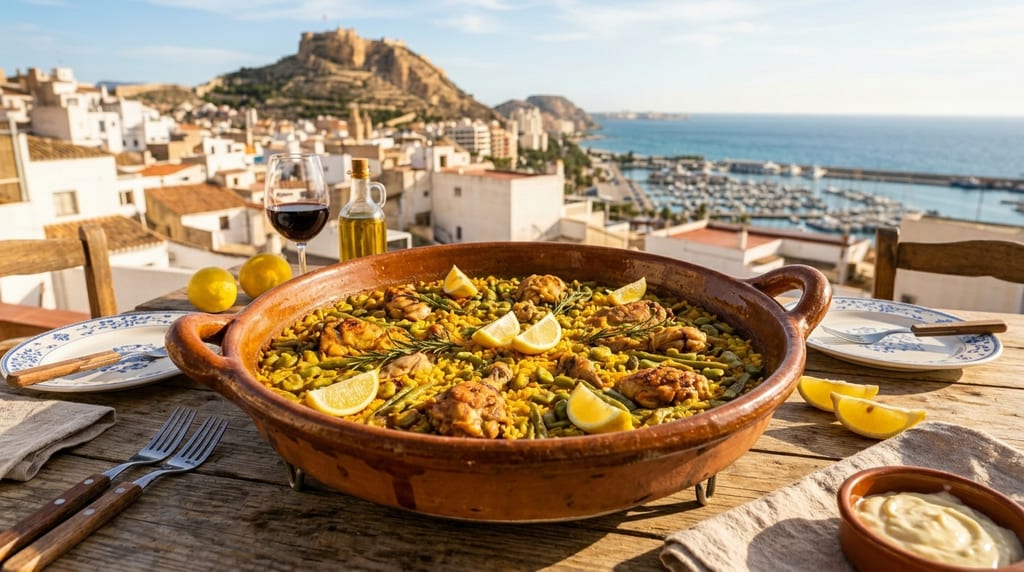
Paella Valenciana & Traditional Alicante Food
Complete culinary guide — authentic recipe, where to eat and what to avoid
TL;DR — The Quick Answer
Paella valenciana is a dish from the Albufera lake region — chicken, rabbit, green beans, garrofón and saffron, NO seafood. In Alicante, the signature dish is arroz a banda — fisherman's rice cooked in a rich fish stock. Restaurants serving paella in the evening or mixing meat with shrimp are tourist traps. A set lunch (menu del día) with rice costs €14–20 (2026).

By:Rafał Prońko — Host of Brisa Alacant in Gran Alacant on the Costa Blanca.
Where does paella come from? A history from the Albufera
Paella valenciana was born in the 15th–16th centuries on the rice fields around Lake Albufera near Valencia — a 21,000-hectare area, of which 17,500 ha are rice paddies (D.O. Arroz de Valencia). Farmers and shepherds cooked it over an open fire using whatever they had at hand: chicken, rabbit, seasonal vegetables, and saffron.
The word paella comes from the Valencian (Catalan) language and simply means "pan" — from the Latin patella. The dish is cooked in a shallow, two-handled pan called a paellera. The first written references to "arroz a la valenciana" appeared in the 18th century, stressing that the rice should be dry — not creamy like risotto.
One important distinction: paella originates in Valencia, not Alicante. The province of Alicante has its own signature dish — arroz a banda — which you'll read about below. For a full guide to Spanish cuisine in the region, see our article 20 Spanish dishes you must try on the Costa Blanca.
Authentic paella valenciana — what really sets it apart
According to Wikipaella, which surveyed over 200 restaurants and drove 700 km across the region, authentic paella valenciana has exactly 10 base ingredients: rice, water, extra virgin olive oil, salt, saffron, tomato, flat green beans (ferraura), white garrofón beans, chicken and rabbit. No seafood. No chorizo. No onion.
Allowed ingredients
- • Chicken and rabbit (meat)
- • Flat green beans (ferraura/bajoqueta)
- • White garrofón beans
- • Saffron (or valencian colorante)
- • Tomato, extra virgin olive oil
- • Optional: snails (vaquetas), artichokes
This is NOT paella valenciana
- • Seafood (shrimp, clams, squid)
- • Chorizo or smoked sausage
- • Onion, carrot, peas
- • Mixing meat with seafood
- • Arborio or basmati rice
- • Dish served in the evening
The key to success is the socarrat — the crispy, slightly caramelised layer of rice at the bottom of the pan. It forms in the last 30–60 seconds on high heat through starch caramelisation and the Maillard reaction. Water-to-rice ratio according to Valencian chefs: 2–3 cups water per 1 part rice (El Español Cocinillas, 2026). Never stir after adding the rice.
Recipe: Paella Valenciana (serves 4)
Ingredients:
- •400 g bomba rice (D.O. Arroz de Valencia)
- •500 g chicken (portions, bone-in)
- •400 g rabbit (portions)
- •150 g flat green beans (ferraura / bajoqueta)
- •80 g white garrofón beans (or lima beans)
- •2 tomatoes (grated)
- •1 tsp saffron (or valencian colorante)
- •1.2 litres water or light chicken stock
- •6 tbsp extra virgin olive oil
- •Salt to taste
- •Optional: rosemary sprig, sweet paprika (ñora or pimentón dulce)
Method:
- 1. Heat oil and brown the meat: In a paellera or large shallow pan, heat the oil over medium heat. Brown the chicken and rabbit pieces on all sides for 8–10 minutes until golden. Push the meat to the sides of the pan.
- 2. Make the sofrito: In the centre of the pan, sauté the green beans for 3 minutes, add grated tomatoes and cook for 3–4 more minutes until the liquid evaporates. Add pimentón dulce, stir quickly for 30 seconds.
- 3. Simmer the stock in the pan: Add the water or stock. Add garrofón beans and saffron. Boil on high heat for 15–20 minutes — the meat should be almost tender and the stock will gain flavour.
- 4. Add rice and finish cooking: Spread the rice evenly across the surface. Do not stir after this point. Cook 5 minutes on high, 8 minutes on medium, 3–4 minutes on low. The rice must absorb all the liquid.
- 5. Create the socarrat: In the last 30–60 seconds, increase to high heat. Listen for a characteristic crackling — that's the socarrat forming. Cover with foil for 5 minutes before serving. Serve directly from the pan.
Alicante rice dishes — beyond paella
Arroz a banda — Alicante's pride
Invented by fishermen of the Alicante coast. The name means "rice apart" in Valencian — the rice is served separately from the fish. Fishermen cooked small fish (morralla) and used the stock to cook the rice the next day. Served with salmorreta sauce and alioli. (Alicante Turismo)
Arroz negro — black rice
Black rice coloured with cuttlefish or squid ink — intense sea flavour. Cooked in fish stock (not water), served with alioli for contrast.
Arroz al senyoret — gentleman's rice
Seafood paella with pre-peeled shellfish (prawns, squid, clams without shells) — so the gentleman (senyoret) doesn't dirty his fingers. A specialty of Alicante province. (Fascinating Spain)
Local tapas and specialities — what to order
Esgarraet
Salad of roasted red peppers and salt cod, torn by hand (esgarrar), marinated with garlic and olive oil for 2+ hours. A Holy Week classic.
Gambas Rojas de Dénia
Red prawns fished at ~1,000 m depth. Price: €150–370/kg (auction record 2023). Served a la plancha with coarse salt. No official PGI — just a city brand. (El Español)
Where to eat in Alicante — trusted spots and traps to avoid
Ferran Adrià named Restaurant Alfonso Mira in Aspe (Alicante province) as the place with "the world's best paella" for just €16 per person (El Economista, 2024). Great food in Alicante doesn't have to cost a fortune.
Nou Manolín (since 1971)
Calle Villegas 3, Alicante. Legendary tapas bar with superb rice dishes — frequented by locals, not tourists. Fresh seafood daily.
Piripi
Av. Óscar Esplá 30, Alicante. Market-fresh kitchen, charcuterie, salted fish, arroces. Another Grupo Gastronou gem.
Restaurante Dársena
Alicante sports harbour. Over 100 rice variations, harbour views. The temple of arroz a banda.
Mercado Central
Avenida Alfonso el Sabio 10. Building from 1921. Open Mon–Fri 7:00–14:30, Sat 7:00–15:00. Buy fresh bomba rice, seafood and all paella ingredients here.
Tourist traps — avoid
- • Explanada de España — low quality, high prices
- • Calle Mayor — restaurants with menus in 6 languages and street touts
- • Places serving paella in the evening — always uses frozen ingredients
- • Paella ordered for 1 person — authentic paella needs at least 2 and 25–40 minutes wait
Food prices in Alicante 2026
Frequently asked questions about paella and Alicante food
What is the difference between paella valenciana and seafood paella?
Traditional paella valenciana comes from the Albufera lake region and contains chicken, rabbit, flat green beans (ferraura), white garrofón beans, and saffron — no seafood. Paella de marisco is a separate coastal dish. Valencians consider mixing meat with seafood a culinary heresy called "paella mixta".
What rice is best for paella?
Bomba rice (D.O. Arroz de Valencia) is best — its grains expand widthways, not lengthways, absorbing up to 3 times their volume in stock without getting mushy. The senia and albufera varieties are also excellent alternatives. Never use basmati or arborio for paella.
What is socarrat in paella?
Socarrat is the crispy, slightly caramelised layer of rice at the bottom of the paellera pan. It forms in the last 30–60 seconds of cooking on high heat through starch caramelisation and the Maillard reaction. Valencians say: without socarrat, it's just rice — not real paella.
Why do Spaniards only eat paella for lunch, not dinner?
Paella historically was a midday dish for field workers around the Albufera, eaten at noon for energy throughout the afternoon. It is calorie-dense and heavy — not suited to the Spanish tradition of light dinners around 9pm. Restaurants serving paella in the evening are almost always tourist traps.
What is arroz a banda and how is it different from paella?
Arroz a banda ("rice apart") is Alicante's signature dish, invented by local fishermen. Rice is cooked in an intense stock made from small fish (morralla) and served separately from the fish, accompanied by salmorreta sauce and alioli. Unlike paella, it has no vegetables and uses a pure fish stock.
Sources & References
- Wikipaella — Authentic ingredients(accessed: 2026-04-25)
- D.O. Arroz de Valencia — Official body(accessed: 2026-04-25)
- Alicante Turismo — Arroz a Banda (Fisherman's Rice)(accessed: 2026-04-25)
- The Local ES — Why paella is only eaten at lunch(accessed: 2026-04-25)
- El Economista — Ferran Adrià on Alicante's best paella (€16)(accessed: 2026-04-25)
- El Español — Gambas rojas de Dénia price(accessed: 2026-04-25)
- Grupo Gastronou — Nou Manolín & Piripi(accessed: 2026-04-25)
- Ministerio de Cultura — Paella Intangible Cultural Heritage(accessed: 2026-04-25)