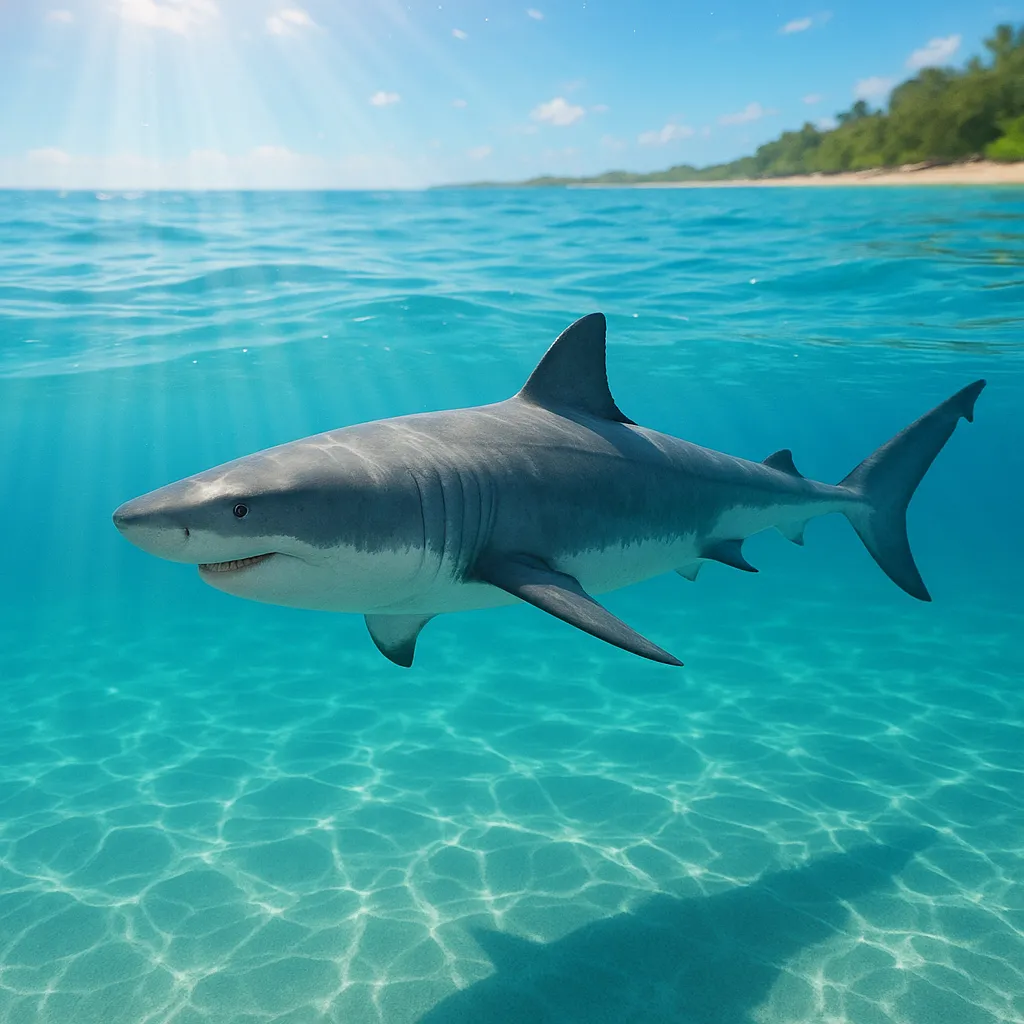
Sharks on Costa Blanca - Fact or Fiction?
Reassuring facts about bathing safety in the Mediterranean Sea
Sharks on Costa Blanca are a topic that arouses curiosity and concern among tourists visiting the Spanish Mediterranean coast. Sporadic media reports about blue shark (Prionace glauca) sightings can be worrying, but statistics unequivocally confirm that the beaches of the Alicante region are among the safest in Europe. Over the past 500 years only 4-5 incidents have been recorded in all of Spain, and the probability of a shark attack is 1 in 11,500,000 — less likely than being struck by lightning. Blue sharks naturally reside at depths of 50-200 m and instinctively avoid shallow bathing waters. Below you will find a comprehensive guide with facts, statistics, and expert advice.
Key facts
• Costa Blanca is safe: Only 4-5 shark attacks in all of Spain in 500 years
• Last contact incident: 2016 in Elche — minor hand injury
• Latest sighting: 10 August 2025 in Calpe — shark seen from a distance, no contact
• Species: Blue shark — naturally avoids shallow waters and beaches
• Attack probability: Lower than being struck by lightning
In recent years, sporadic reports about sharks have appeared on social media off the Costa Blanca coast. Is there cause for concern? Absolutely not! Here are the actual data and the reassuring truth about our beach safety.
What is the blue shark found off the Costa Blanca coast?
🦈 Meet the blue shark
Prionace glauca is a species of shark that naturally occurs in the Mediterranean Sea
Length: 1.5-3 metres (very rarely more)
Diet: Small fish, squid, prawns — not humans!
Behaviour: Avoids shallow waters, lives at depths of 50-200 m
What shark incidents have been recorded on Costa Blanca?
July 2016 - Elche (Arenales del Sol)
Only confirmed incident: A blue shark lightly scratched the hand of a 40-year-old man. The wound was stitched at the hospital and the man was discharged the same day. The beach was preventively closed for 24 hours.
August 2021 - Benidorm
False alarm: A shark was observed from a distance. No contact with people. Specialists confirmed the animal was swimming far from shore towards deep waters.
10 August 2025 - Calpe
Latest sighting: A blue shark observed far from shore. No contact with swimmers. The animal was swimming calmly towards deep waters.
2022-2024
Zero contact incidents: No confirmed cases of shark-human contact at Costa Blanca beaches. Millions of safe swims.
What is the real risk of a shark attack?
⚡ Higher risk than sharks
- • Lightning strike: 1:15,300
- • Sunburn: 1:3
- • Drowning in a pool: 1:11,000
- • Mosquito bites: 1:1
🦈 Shark attack risk
1:11,500,000
In the Mediterranean Sea this is practically impossible. You have better chances of winning the lottery!
Why don't sharks appear at Costa Blanca beaches?
Shallow waters
Blue sharks prefer depths of 50-200 m. Our bathing beaches are just 1-3 m deep.
No food source
In shallow waters there is no natural food for them — squid and deep-sea fish are absent.
Self-preservation instinct
Sharks are cautious and avoid contact with humans. We are a threat to them, not the other way round.
Practical tips for peace of mind
• Swim in designated zones: Where lifeguards are on duty
• Avoid swimming at dusk: When fish are most active
• Don't wear shiny jewellery: It can attract fish
• Don't swim with open wounds: Basic sea hygiene
• Listen to lifeguards: They are professionals who know local conditions
What do experts say about sharks in the Mediterranean?
"The blue shark occurs naturally in the Mediterranean Sea, but is generally not dangerous to humans. It does not come to beaches to attack anyone. It is an animal that avoids contact with people."— Instituto Oceanografico, Spain
"The Mediterranean shark population has declined by over 90% in the past century due to overfishing and habitat degradation. It is sharks that need our protection, not the other way round. Every shark sighting near shore should be treated as a valuable natural phenomenon, not a cause for panic."— Oceanografic Valencia, report on the state of shark populations in the western Mediterranean
How are sharks protected on Costa Blanca?
It is worth knowing that blue sharks are a species protected under the Barcelona Convention for the protection of the Mediterranean Sea. The International Union for Conservation of Nature (IUCN) classifies the blue shark as Near Threatened due to a drastic population decline caused by overfishing. Spanish law prohibits the intentional catching of this species, and fishermen are obliged to release accidentally caught specimens. Costa Blanca also operates a marine monitoring system that tracks the migrations of large pelagic fish, including sharks. Data from this system confirm that blue sharks appear exclusively in deep open sea waters and do not approach bathing zones.
The Alicante region invests significant resources in beach safety. During the summer season, the main Costa Blanca beaches are staffed by trained lifeguards equipped with observation drones and patrol boats. The beach flag system (green, yellow, red) informs swimmers about current conditions. In the event of any large fish sighting near the shore, services immediately close the bathing zone until safety is confirmed. This preventive system means the risk of any incident is practically zero, and tourists can fully enjoy swimming in the warm Mediterranean waters.

Rafał Prońko
Właściciel Brisa Alacant
Właściciel apartamentu wakacyjnego Brisa Alacant od 2023 roku, regularnie odwiedzam Costa Blanca i znam region z własnych doświadczeń. Wszystkie miejsca opisane na blogu odwiedziłem osobiście — zdjęcia i porady pochodzą z moich własnych wizyt. Pomagam gościom odkrywać najlepsze atrakcje regionu Alicante.
Frequently Asked Questions
Are sharks on Costa Blanca dangerous to humans?
Sharks on Costa Blanca do not pose a real threat to swimmers or residents. According to data from the International Shark Attack File (ISAF) maintained by the Florida Museum of Natural History, over the past 500 years only 4-5 shark incidents have been recorded in all of Spain, none of which resulted in death. The last contact on Costa Blanca took place in July 2016 at Arenales del Sol beach in Elche and ended with only a minor scratch to the hand of a male swimmer — the wound was stitched at the hospital and the patient was discharged the same day. The statistical probability of a shark attack in the Mediterranean Sea is 1 in 11,500,000, meaning it is significantly lower than the risk of being struck by lightning (1 in 15,300) or even drowning in a swimming pool (1 in 11,000). The dominant species — the blue shark (Prionace glauca) — naturally resides at depths of 50 to 200 metres and instinctively avoids the shallow coastal waters where tourists swim.
What shark species live off the coast of Costa Blanca?
The most commonly encountered species in Costa Blanca waters is the blue shark (Prionace glauca), which reaches a length of 1.5 to 3 metres, though individual specimens can grow up to 3.8 metres. This species is characterised by a slender body and an intensely blue colouration on the dorsal side. It feeds mainly on small pelagic fish, squid, octopus, and prawns — humans are absolutely not part of its diet. The blue shark naturally resides at depths of 50 to 200 metres in the open sea and instinctively avoids the shallow coastal waters where tourists swim. In addition to the blue shark, the deeper waters of the Mediterranean Sea are also sporadically home to the spiny dogfish (Squalus acanthias), the porbeagle shark (Lamna nasus), and the thresher shark (Alopias vulpinus). None of these species is aggressive towards humans. According to data from the Oceanografic in Valencia, the shark population in the western Mediterranean is declining due to overfishing, meaning that encountering a shark off the coast of Costa Blanca is extremely unlikely.
Do sharks in the Mediterranean attack humans?
Shark attacks in the Mediterranean Sea are extremely rare and represent a marginal phenomenon on a global scale. According to the International Shark Attack File (ISAF) in Florida, in the entire Mediterranean basin since 1900 only a few dozen unprovoked incidents have been recorded — compared to over 1,600 cases off the coasts of the United States in the same period. The statistical probability of a shark attack in this region is 1 in 11,500,000, which is significantly lower than the risk of being struck by lightning (1 in 15,300) or a serious car accident. Blue sharks (Prionace glauca), the dominant species in the western Mediterranean, instinctively avoid contact with humans and do not regard them as potential food. Their diet is based on pelagic fish, squid, and crustaceans. Most so-called incidents are in reality accidental brushes or provoked contacts initiated by divers. Experts from the Oceanografic in Valencia emphasise that sharks are more threatened by humans than humans are by sharks.
Is it safe to swim at Costa Blanca beaches?
Costa Blanca beaches are among the safest in all of Europe for sea bathing. Every year millions of tourists from around the world swim at over 200 beaches in the Alicante region without any incidents involving sharks. Many of these beaches hold the prestigious Blue Flag award, confirming the highest standards of safety, water quality, and lifeguard infrastructure. Beaches such as Playa de San Juan, El Postiguet, and Carabassi are supervised by professional lifeguards during the summer season from June to September. The coastal waters in bathing zones have a depth of just 1 to 3 metres, which is too shallow for blue sharks that prefer depths of 50 to 200 metres in the open sea. Simply follow the lifeguards' advice, swim in designated zones marked with flags, and avoid solitary swimming after dusk. By following these simple rules, you can fully enjoy safe holidays on Costa Blanca.
When are sharks most commonly seen off the Spanish coast?
Sporadic sightings of blue sharks off the Spanish coast occur mainly in the summer months, from June to September, with peak activity in July and August. During this period, warmer surface waters at temperatures of 24-28 degrees Celsius attract schools of sardines, anchovies, and mackerel closer to shore, and blue sharks follow these fish. However, even at the height of the tourist season, sharks remain in deep waters, far from bathing zones. The latest observations in Calpe in August 2025 confirmed this pattern — a blue shark was spotted several hundred metres from shore swimming calmly towards the open sea, without approaching the beach. Costa Blanca rescue services use an advanced marine monitoring system and immediately inform swimmers of any sightings. In the winter season (October-March) shark observations near the shore are virtually non-existent, as schools of fish migrate to deeper, cooler waters.
Źródła i odnośniki
- International Shark Attack File (ISAF) - Florida Museum of Natural History(dostęp: 2026-02-15)
- Oceanografic Valencia - Sharks in the Mediterranean(dostęp: 2026-02-15)
- Shark Attack Data - Global Shark Attack File (GSAF)(dostęp: 2026-02-10)
- IUCN Red List - Prionace glauca (Blue Shark)(dostęp: 2026-02-10)
- Ministerio para la Transicion Ecologica - Protected Marine Species(dostęp: 2026-01-20)
Enjoy safe holidays!
Brisa Alacant is located near one of the safest beaches in Europe. Carabassi Beach is a paradise for families — crystal-clear water, gentle waves, and professional lifeguard care.
Millions of guests choose Costa Blanca every year. Join them!
Przeczytaj również
Carabassi Beach - The Most Beautiful Beach
Wild beach with dunes and crystal-clear water, 10 min from Gran Alacant.
NatureTabarca Island - Snorkelling Paradise
The only inhabited island of Valencia with a marine reserve.
NatureClot de Galvany - Nature Reserve
Free nature reserve 5 min from Gran Alacant.