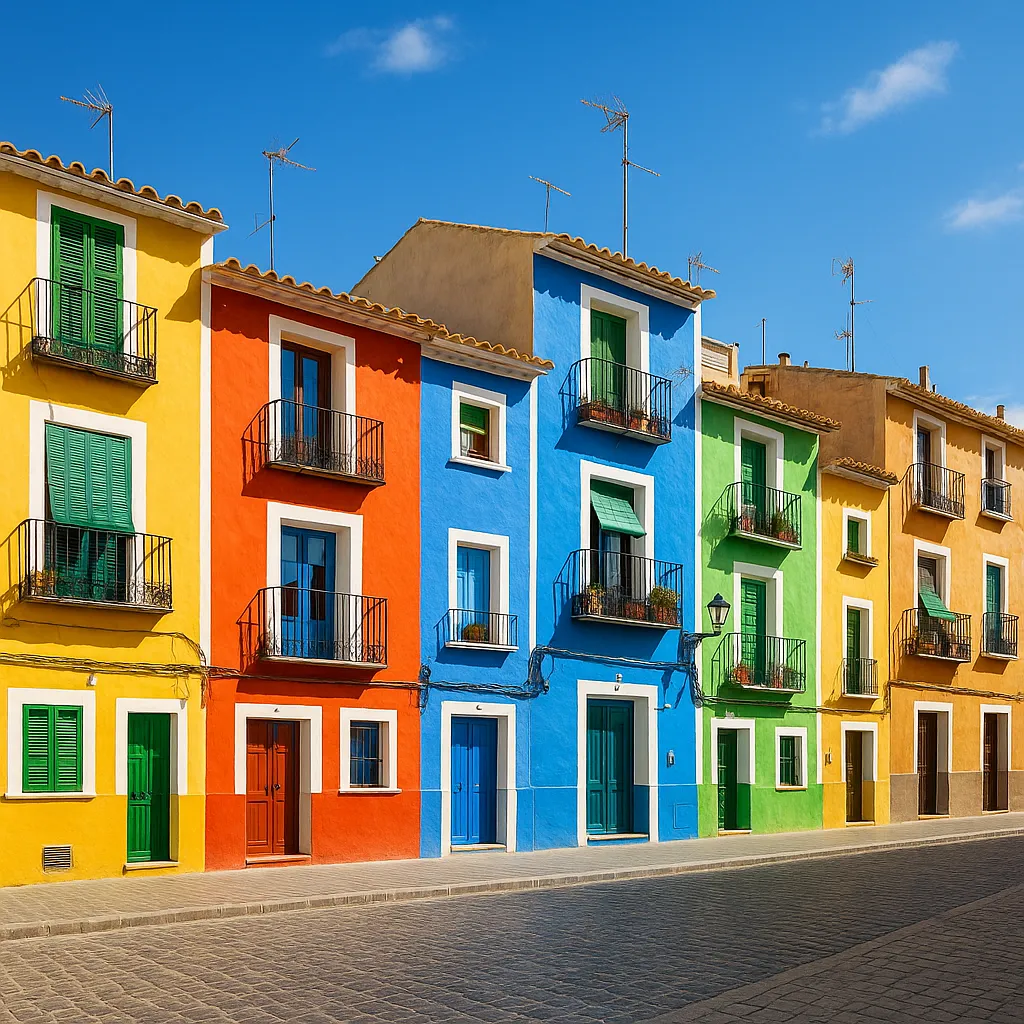
Colourful Houses of Villajoyosa - Rainbow Gem of Costa Blanca
18th-century fishing tradition turned into the most Instagrammable spot on the coast
Villajoyosa (La Vila Joiosa) is a picturesque historic fishing town on the Costa Blanca, famous for its row of colourful houses rising above the Amadorio river and the Mediterranean Sea. The tradition of painting facades in bright colours dates back to the 18th century, when fishermen marked their houses so they could recognise them from the sea. Besides its iconic architecture, Villajoyosa offers the free Valor Chocolate Museum, a sandy Blue Flag beach and a charming Old Town with narrow streets. The town lies 45 km from Gran Alacant (about 40 min via the AP-7 motorway) and is an ideal destination for a half-day or full-day trip combined with a visit to nearby Benidorm.
Why Visit Villajoyosa?
• Iconic colourful houses — the most photographed spot on Costa Blanca
• Free Valor Chocolate Museum — tastings included
• Blue Flag beach right below the colourful facades
• Charming Old Town with 15th-century walls and narrow streets
• Hanging houses above the Amadorio river — spectacular at sunset
Villajoyosa is one of those places on the Costa Blanca that enchants you from the very first moment. The colourful houses reflected in the waters of the Mediterranean create a landscape that looks like it belongs on a postcard. But this little town is much more than just a pretty facade — it is a living museum of fishing traditions, chocolate craftsmanship and Iberian history.
Why Are the Houses in Villajoyosa Colourful?
A Tradition Born at Sea
In the 18th century, Villajoyosa was a bustling fishing port. Fishermen painted their house facades in vivid colours — blue, yellow, pink, green and orange — to recognise their homes from the sea when returning from long fishing trips. Each family chose a different shade, which over time created the characteristic rainbow panorama visible from far away.
This tradition has survived centuries and is now protected by the municipal authorities as cultural heritage of the Valencia region. Modern regulations require maintaining the colourful facades in their original hues, ensuring this unique townscape endures for future generations.
Fun Fact
The colourful houses of Villajoyosa have become one of the most popular Instagram spots on the Costa Blanca, appearing in thousands of photos shared each year. The best angles are from the Amadorio river bridge and from the sea.
What Are the Hanging Houses Above the Amadorio River?
One of the most impressive sights in Villajoyosa is the row of houses perched on the edge of a cliff above the Amadorio river. These so-called "hanging houses" create a dramatic silhouette against the sky, especially stunning at sunset when warm light paints the facades in golden tones. The buildings date back several centuries and represent a unique example of Mediterranean cliff-side architecture.
Best Viewpoint
The most breathtaking view of the hanging houses is from the bridge over the Amadorio river (Pont de Santa Marta). From here you can see the full panorama of colourful facades reflected in the river water.
Location: Pont de Santa Marta, Avinguda del Pais Valencia
Best time for photos: Golden hour (1 hour before sunset) for warm, magical light
Where Are the Best Places to Admire the Colourful Houses?
Amadorio River Bridge
The classic viewpoint for the rainbow panorama. From here you see the full row of colourful facades reflected in the river below, with the Mediterranean in the background.
Tip: Visit at sunrise or sunset for the most dramatic colours
Playa Centro
The beach directly below the colourful houses offers a unique perspective from below, with the rainbow facades rising above the sand and sea. Perfect for combining sightseeing with sunbathing.
The Sea (by Boat or Kayak)
For the most authentic experience, see the houses as the fishermen did — from the water. Kayak rentals are available at Playa Centro during summer months.
What Else Is Worth Seeing in Villajoyosa?
Valor Chocolate Museum
Free admission! See the chocolate production process and enjoy complimentary tastings at one of Spain's most famous chocolate makers.
Old Town (Casco Antiguo)
Narrow winding streets, remains of 15th-century defensive walls and the church of Nuestra Senora de la Asuncion.
Vilamuseu Archaeological Museum
Fascinating archaeological finds including Iberian and Roman treasures discovered in the Villajoyosa area.
Moros y Cristianos Fiesta
Held each July, this spectacular festival features a re-enactment of a naval battle, attracting thousands of visitors from all over Spain.
Practical Information for Visitors
How to Get There
By car: 45 km, approx. 40 min
Route: A-70 then AP-7 north (toll-free) to Villajoyosa exit
Parking: Near Playa Centro or free car park on Avinguda del Pais Valencia
On weekends arrive before 10:00 for easy parking
Best Time to Visit
Morning: 9:00-11:00 — best light on facades from sea side
Golden hour: 1 hour before sunset — magical warm light
Avoid: Midday — harsh shadows on facades
Spring and autumn offer the best conditions with fewer crowds
Costs
Sightseeing walk: Free
Parking: Free at Avinguda del Pais Valencia
Restaurants: From 10-15 EUR per person
What to Bring
Camera or smartphone for photos
Comfortable walking shoes
Sunscreen and hat in summer
Swimwear if visiting the beach
Photography Tips
• Best angle: From the Amadorio river bridge for the classic rainbow panorama
• From below: Playa Centro beach for a dramatic upward perspective
• Details: Walk through the narrow streets to capture colourful doorways and windows
• Reflections: After rain, puddles create beautiful reflections of the facades
Pro tip: Use a polarising filter to enhance the colours and reduce glare from the sea
Where to Eat in Villajoyosa
• Fishing port restaurants — fresh seafood straight from the morning catch
• Playa Centro chiringuitos — beach bars with paella and cold drinks
• Old Town tapas bars — traditional Valencian tapas in a charming setting
• Valor Chocolate Cafe — hot chocolate and churros from the famous local brand
Local specialty: Borreta — a traditional fisherman's stew unique to Villajoyosa

Rafał Prońko
Właściciel Brisa Alacant
Właściciel apartamentu wakacyjnego Brisa Alacant od 2023 roku, regularnie odwiedzam Costa Blanca i znam region z własnych doświadczeń. Wszystkie miejsca opisane na blogu odwiedziłem osobiście — zdjęcia i porady pochodzą z moich własnych wizyt. Pomagam gościom odkrywać najlepsze atrakcje regionu Alicante.
Frequently Asked Questions About Villajoyosa
Why are the houses in Villajoyosa colourful?
The colourful houses of Villajoyosa have a tradition dating back to the 18th century, when La Vila Joiosa was a thriving fishing port on the Costa Blanca. Fishermen painted the facades of their homes in bright colours — blue, yellow, pink, green and orange — so they could recognise them from the sea when returning to port after long hours of fishing. Each family chose a different shade, which over time created the characteristic rainbow panorama visible from far away. This tradition has survived centuries and is now protected by the municipal authorities as cultural heritage of the Valencia region. Modern regulations require the colourful facades to be maintained in their original hues. The colourful houses have become a symbol of Villajoyosa, one of the most photographed attractions on the Costa Blanca and a frequent postcard motif from the Alicante region. Visitors should see them both from the sea side and from the bridge over the Amadorio river, which offers the most beautiful view of the rainbow facades.
How do I get to Villajoyosa from Gran Alacant?
From Gran Alacant to Villajoyosa is approximately 45 kilometres, which takes about 40 minutes by car via the AP-7 motorway towards Benidorm. The route is straightforward: first head for the A-70 motorway towards Alicante, then merge onto the AP-7 (toll-free on this section) and drive north until the Villajoyosa exit. Alternatively, you can take the TRAM train from Luceros station in Alicante — line L1 runs every 30 minutes and the journey takes about 1 hour with sea views. A ticket costs approximately 4 euros one way. Parking in Villajoyosa town centre is limited, especially during summer season. The best option is to park near Playa Centro or at the free car park on Avinguda del Pais Valencia, from where the colourful houses are just a 5-minute walk. On weekends we recommend arriving before 10:00 to find a parking space without difficulty.
What else is worth seeing in Villajoyosa besides the colourful houses?
Besides the famous colourful houses, Villajoyosa offers many attractions worth visiting. The free Valor Chocolate Museum is one of the most popular places — you can see the chocolate production process and try free samples. The historic Old Town (Casco Antiguo) enchants with narrow streets, remains of 15th-century defensive walls and the church of Nuestra Senora de la Asuncion. The hanging houses above the Amadorio river are a spectacular sight, especially at sunset. Playa Centro with its Blue Flag is an ideal place to relax after sightseeing. The fishing port bustles with life in the morning when fishermen return with their catch. The Vilamuseu museum presents archaeological finds including Iberian and Roman treasures. In July the spectacular Moros y Cristianos fiesta takes place with a re-enactment of a naval battle, attracting thousands of spectators from all over Spain.
When is the best time to visit Villajoyosa?
Villajoyosa is beautiful at any time of year thanks to its mild Mediterranean climate, but the best conditions for sightseeing and photographing the colourful houses are in spring (April-May) and autumn (September-October). During these months temperatures are pleasant (20-25 degrees Celsius), there are fewer tourists than at peak season and the sunlight beautifully highlights the colours of the facades. In summer (July-August) it is hot, but the Moros y Cristianos fiesta takes place — one of the most important cultural events on the Costa Blanca. In winter temperatures rarely drop below 12 degrees Celsius, so walking is still comfortable. For the best photographs, visit in the morning between 9:00 and 11:00 when the sun illuminates the colourful facades from the sea side, or during the golden hour before sunset when warm light gives the houses a magical glow. Avoid midday hours when harsh light creates strong shadows on the facades.
Does Villajoyosa have a beach?
Yes, Villajoyosa has several beautiful beaches that perfectly complement a visit to see the colourful houses. The main one is Playa Centro (Playa de Villajoyosa) with its prestigious Blue Flag — a sandy beach 1.4 kilometres long located right beneath the colourful houses, creating a spectacular backdrop for photographs. It is well equipped with showers, toilets, lifeguards and sunbed hire. The water is clean and gradually deepens, making it safe for families with children. Nearby there are also smaller, more secluded coves: Platja del Torres to the south offers a quieter atmosphere and rocky seabed popular with divers, whilst Platja de l'Esparello is a picturesque beach surrounded by cliffs with crystal-clear water. During summer season chiringuitos — seaside bars serving fresh seafood and cold drinks — operate on Playa Centro.
Źródła i odnośniki
- Turismo Villajoyosa — Official tourism portal of La Vila Joiosa(dostęp: 2026-02-27)
- Vilamuseu — Museum and Archaeological Sites of Villajoyosa(dostęp: 2026-02-27)
- TripAdvisor — Villajoyosa Colourful Houses tourist reviews(dostęp: 2026-02-27)
- Chocolates Valor — History of the chocolate factory in Villajoyosa(dostęp: 2026-02-27)
- TRAM Alicante — Timetable line L1 Alicante-Benidorm(dostęp: 2026-02-27)
Explore the Rainbow Town of Costa Blanca
Stay at our apartment in Gran Alacant — just 40 minutes from Villajoyosa's colourful houses, Valor Chocolate Museum and Blue Flag beaches.
More to See in Villajoyosa and Surroundings
While strolling through the colourful streets of Villajoyosa, be sure to visit the Valor Chocolate Museum — admission is free and tasting is a must! If you are looking for local flavours, also plan a visit to the Mercado Central in Alicante — a historic market dating from 1921.
Przeczytaj również
Valor Chocolate Museum
Free tour of the Valor chocolate factory in Villajoyosa.
Local CultureBodegas Xalo - Moscatel Valley Winery
Moscatel wine tasting at a traditional winery in the Jalon Valley.
Local CultureMercado Central - Historic Market from 1921
The freshest produce in Alicante at a historic market hall.