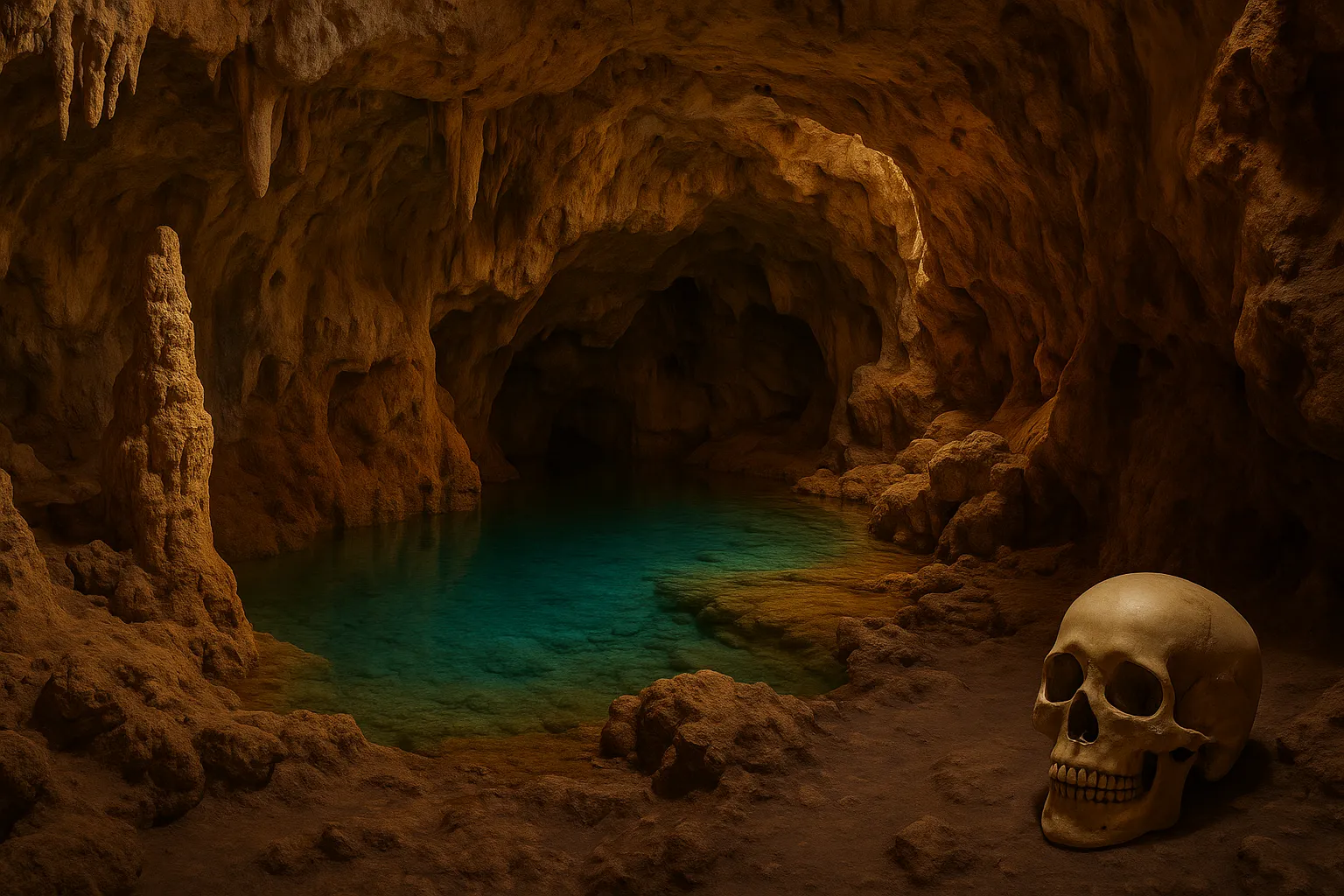
Cueva de las Calaveras - Cave of Skulls in Benidoleig
A prehistoric cave with thousands of stalactites and a mysterious past
The Cave of Skulls (Cueva de las Calaveras) is a prehistoric cave in Benidoleig, near Denia on the Costa Blanca, discovered in the 18th century during archaeological investigations. Its name comes from 12 human skulls found inside, dating to the Bronze Age (c. 3000-1000 BCE). The cave is approximately 400 metres long and impresses with thousands of stalactites and stalagmites shaped over millions of years. The temperature inside remains a constant 14-16 degrees Celsius regardless of the season. A ticket costs just 4 euros for adults, and the tour takes about 45 minutes. The cave lies 95 km from Gran Alacant and makes an excellent day-trip destination combined with exploring Denia or the Jalon Valley.
Why Visit the Cave of Skulls?
• Thousands of stalactites and stalagmites formed over millions of years
• Fascinating archaeological history — Bronze Age burial site
• Constant 14-16 degrees Celsius — perfect escape from summer heat
• Only 4 EUR admission — exceptional value for money
• Family-friendly — safe, well-lit route suitable for children
Cueva de las Calaveras is one of the most accessible and affordable cave experiences on the Costa Blanca. Whether you are a geology enthusiast, a history lover or simply looking for a unique day out with the family, this prehistoric cave in the heart of the Jalon Valley will not disappoint.
What Is the History of the Cave of Skulls?
Bronze Age (3000-1000 BCE) — Ritual Burial Site
Prehistoric communities of the Jalon Valley used the cave as a burial ground. Twelve human skulls, ceramic fragments and flint tools were later discovered here.
18th Century — Discovery by Cavanilles
Spanish naturalist Antonio Jose Cavanilles conducted the first systematic archaeological investigations of the cave, discovering the skulls that gave it its name.
20th Century — Opening as a Tourist Attraction
The cave was opened to visitors with professional lighting and safety barriers, allowing people to admire the spectacular underground formations.
Today — Archaeological Finds at MARQ
The original finds from the cave can be seen at the Museo Arqueologico Provincial de Alicante (MARQ), where they form part of the permanent exhibition.
What Can You See Inside the Cave?
Stalactites and Stalagmites
The cave features thousands of impressive formations created over millions of years. The largest stalactites reach several metres in length, whilst the stalagmites grow upward from the cave floor creating spectacular natural columns where they meet.
The Toll Blau (Blue Dome)
The most impressive chamber in the cave is the so-called Toll Blau — a vast dome with a natural blue hue caused by mineral deposits. The acoustics in this chamber are extraordinary, and the professional lighting creates a truly magical atmosphere.
Skull-Shaped Rock Formations
Some natural rock formations inside the cave distinctly resemble human skulls in shape, adding to the mysterious atmosphere. Combined with the archaeological discoveries, these formations make the cave's name doubly fitting.
How to Plan Your Visit to Cueva de las Calaveras
Opening Hours
Summer (Jul-Sep): 10:30 - 19:30
Winter (Oct-Jun): 10:30 - 17:30
Ticket Prices
Adults: 4 EUR
Children (5-12): 2.50 EUR
Under 5: Free
Groups (20+): 3 EUR/person
School groups: 2 EUR/pupil
How to Get There
By car: 95 km, approx. 1h 10min
Route: AP-7 north towards Denia, then CV-720 to Benidoleig
Address: Carretera Benidoleig-Pedreguer, km 2
Website: cuevalascalaveras.com
Free parking available on site
Well signposted with brown tourist signs
Accessibility
Well-lit route with safety barriers
Comfortable shoes recommended (uneven surface)
Not suitable for pushchairs — use a baby carrier
Constant 14-16 degrees Celsius inside — bring a jumper
Practical Tips
• Bring a warm layer — constant 14-16 degrees Celsius inside, even in summer
• Wear sturdy shoes — the ground is uneven and can be slippery
• Visit in the morning — fewer tourists, more peaceful experience
• Allow 45 minutes for the full tour at a comfortable pace
• Combine with Denia or Xalo — both are nearby and worth a visit
Best Photo Spots in Cueva de las Calaveras
The Toll Blau Chamber
The vast blue-tinted dome is the most photogenic spot in the cave. Use a long exposure for the best results.
Stalactite Curtains
Thin curtain-like formations illuminated from behind create dramatic silhouettes — a photographer's dream.
Cave Entrance
The contrast between the bright exterior and dark cave mouth makes for a striking composition.
Column Formations
Where stalactites and stalagmites meet to form complete columns — some of the cave's most impressive features.

Rafał Prońko
Właściciel Brisa Alacant
Właściciel apartamentu wakacyjnego Brisa Alacant od 2023 roku, regularnie odwiedzam Costa Blanca i znam region z własnych doświadczeń. Wszystkie miejsca opisane na blogu odwiedziłem osobiście — zdjęcia i porady pochodzą z moich własnych wizyt. Pomagam gościom odkrywać najlepsze atrakcje regionu Alicante.
Frequently Asked Questions About the Cave of Skulls
How much does a ticket to the Cave of Skulls cost?
Admission to Cueva de las Calaveras costs 4 euros for adults and 2.50 euros for children aged 5 to 12. Children under 5 enter completely free of charge, making this attraction exceptionally family-friendly for those with young children. Organised groups of more than 20 people can benefit from a special group discount and pay only 3 euros per person, whilst school groups on educational trips pay just 2 euros per pupil. Tickets are purchased exclusively on site at the ticket office located directly at the cave entrance — there is currently no option for online reservation or purchase. It is worth having cash on hand, although the ticket office also accepts debit and credit card payments. Compared to other tourist attractions on the Costa Blanca, the ticket prices are extremely affordable, especially considering the exceptional geological and archaeological value of this prehistoric site. There are no additional charges for using the free car park or for taking photographs inside the cave.
What are the opening hours of Cueva de las Calaveras?
The Cave of Skulls is open to visitors every day throughout the calendar year, on weekdays, weekends and public holidays alike. During the summer season, from the beginning of July to the end of September, opening hours are 10:30 to 19:30, allowing comfortable evening visits after the worst of the heat. During the winter season, covering the months from October to June, the cave is open from 10:30 to 17:30. The last entry for the tour always takes place 45 minutes before the ticket office closes. The tour of the illuminated underground route takes approximately 45 minutes at a comfortable and unhurried pace. It is worth checking the current opening hours on the official website before your planned visit, as they may vary slightly during the Christmas holidays, Easter and during traditional local fiestas in Benidoleig. The best time to visit is in the morning just after opening, when there are fewest tourists and you can admire the rock formations in peace.
How do I get to Cueva de las Calaveras from Gran Alacant?
From Gran Alacant to Cueva de las Calaveras in the picturesque village of Benidoleig is approximately 95 kilometres, which takes roughly 1 hour and 10 minutes by car. The most convenient and fastest route follows the AP-7 motorway northbound towards Denia, then you exit onto the regional road CV-720 towards Benidoleig. The cave is located on the Carretera Benidoleig-Pedreguer at kilometre 2 and is very well signposted with characteristic brown tourist signs visible from the main road. There is a spacious free car park at the cave with spaces for both regular cars and larger campervans or tour buses. Getting there by public transport is unfortunately difficult — buses from Alicante to Denia run several times daily, but from Denia to Benidoleig you would need to take a taxi or arrange a transfer. A visit to the cave is well worth combining with exploring nearby Denia, the charming town of Xalo with its famous Moscatel wineries, or walks through the picturesque Jalon Valley.
Is the Cave of Skulls suitable for children?
Yes, Cueva de las Calaveras is fully suitable and completely safe for children of practically any age. The entire tour route is very well lit with professional artificial lighting and carefully secured with metal safety barriers at points where the path runs along rock edges. Inside the cave there is a constant temperature of around 14 to 16 degrees Celsius year-round, so even on hot summer days it is worth bringing a warm jumper or light jacket for children. The ground inside is uneven and damp in places, so comfortable sports shoes with good grip soles are strongly recommended. For the youngest children under 3 years old, completing the full route may be somewhat challenging due to steep stairs and narrow corridor sections — pushchairs are definitely not recommended, a hiking baby carrier works much better. School-age children are usually genuinely fascinated by the impressive stalactite and stalagmite formations. At the entrance there are colourful information boards with illustrations that help younger visitors better understand the fascinating history of the cave.
Why is it called the Cave of Skulls?
The name Cueva de las Calaveras, meaning Cave of Skulls in English, comes from twelve human skulls and numerous skeletal bone fragments found deep inside the cave during the first systematic archaeological investigations carried out in the second half of the 18th century by the eminent Spanish naturalist and botanist Antonio Jose Cavanilles. These discoveries clearly indicate that the cave was used for centuries as a ritual burial site during the Bronze Age, dated to approximately 3000 to 1000 BCE. The finds also included numerous fragments of utilitarian ceramics and primitive flint tools, confirming the centuries-long continuous use of this site by prehistoric communities inhabiting the fertile Jalon Valley. Interestingly, some natural rock formations inside the cave also distinctly resemble human skulls in shape, which further enhances the mysterious atmosphere of the place and justifies this remarkable name. The original archaeological finds from the cave can today be admired at the Museo Arqueologico Provincial de Alicante (MARQ), where they form a valuable part of the permanent exhibition.
Źródła i odnośniki
- Cueva de las Calaveras - Official Website(dostęp: 2026-02-27)
- Turismo Benidoleig - Ayuntamiento de Benidoleig(dostęp: 2026-02-27)
- Comunitat Valenciana - Cueva de las Calaveras(dostęp: 2026-02-27)
- MARQ - Museo Arqueologico Provincial de Alicante(dostęp: 2026-02-27)
- Costa Blanca Turismo - Caves of Marina Alta(dostęp: 2026-02-27)
Discover the Prehistoric Underground World
Stay at our apartment in Gran Alacant — a perfect base for exploring the Cave of Skulls, the Jalon Valley wineries and the charming town of Denia.
Check AvailabilityThe Jalon Valley — What Else to See
The cave lies in the heart of the Jalon Valley — you can easily combine your visit with wine tasting at Bodegas Xalo (15 minutes by car). On the way back to the coast, stop in colourful Villajoyosa — the rainbow fishing houses make a perfect photo backdrop.
Przeczytaj również
Bodegas Xalo - Moscatel Valley Winery
Moscatel wine tasting at a traditional winery in the Jalon Valley.
NatureTabarca Island - Snorkelling Paradise
The only inhabited island of Valencia with a marine reserve.
EntertainmentTerra Mitica - Theme Park
Theme park with 4 zones inspired by ancient civilisations.