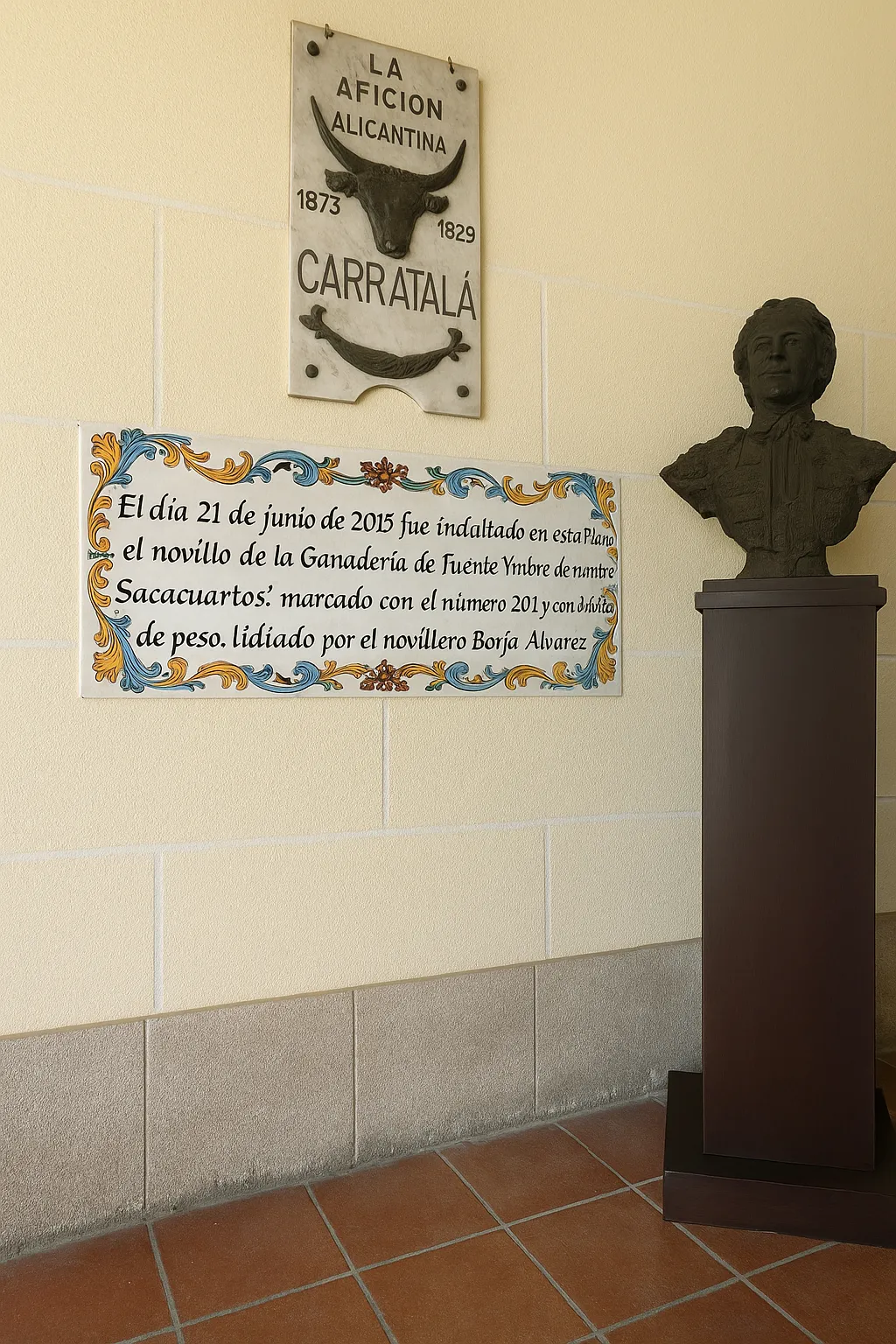
Plaza de Toros - Bullfighting Museum in Alicante
Discover the history of bullfighting in the heart of Alicante
Plaza de Toros in Alicante is a 19th-century bullring that today serves as a bullfighting museum and cultural events venue. Built in 1888 at Placa d'Espanya, the arena seats over 14,000 spectators and is one of the best-preserved in the Valencia region. The Museo Taurino, opened in 2001, presents a rich collection of matador costumes, historical posters and trophies. A ticket costs 12 euros and includes an audio guide available in English, making the visit comfortable for international tourists. This is an essential stop for lovers of Spanish history and culture visiting Alicante from Gran Alacant.
The Plaza de Toros arena in Alicante is not just an architectural monument — it is a living testimony to the centuries-old tradition of bullfighting on the Iberian Peninsula. Built in neoclassical style with its characteristic circular form, the arena stands out with an elegant facade featuring arched arcades and decorative details typical of 19th-century Spanish architecture. The building has undergone several major renovations, the most recent in 2010, allowing it to preserve its historic character whilst meeting modern safety standards. Plaza de Toros occupies a strategic location in central Alicante, adjacent to the Estacion de Alicante-Terminal railway station and the elegant Plaza de Luceros, making it easily accessible for both tourists and residents. After visiting the museum, it is well worth walking to the Old Town of Alicante — the charming Barrio Santa Cruz neighbourhood with colourful streets and tapas bars, just 10 minutes' walk from the arena.
What Is the History of the Arena and Bullfighting in Alicante?
From the 15th Century to Today
The tradition of bullfighting in Alicante dates back to the 15th century, when the first spectacles were organised in city squares. The first documented bullfighting event took place in 1605 to celebrate the birth of the future King Philip IV. Before the permanent arena was built, fights were held in temporary squares, including the famous Plaza del Mar. The current Plaza de Toros, designed by architect Jose Guardiola Pico, was opened on 17 June 1888 with an inaugural corrida featuring legendary matador Rafael Guerrita "Guerrita". Since then the arena has continuously served as a living testimony to Spanish culture and the history of the Valencia region.
Museum Since 2001
The Museo Taurino was ceremonially opened in October 2001 on the initiative of the Diputacion de Alicante. It houses a rich collection of matador costumes, historical posters dating back to the 19th century, trophies, muletas, swords and personal mementoes of famous bullfighters who fought at this arena. The collection includes exhibits connected to figures such as Jose Tomas, Enrique Ponce and Manuel Benitez "El Cordobes". The museum is managed by the Alicante Provincial Council and is regularly enriched with new exhibits from private collectors' donations.
What Can You See at the Bullfighting Museum?
Matador Costumes
Magnificent "traje de luces" (suits of light) — hand-embroidered costumes weighing up to 5-6 kilograms, adorned with gold and silver appliques. Each costume is unique and made to order by specialist tailors. The collection also includes muletas, capotes and ceremonial swords.
Arena and Stands
You can step onto the arena itself and see the venue from the matador's perspective. You will feel the scale and atmosphere of this monumental place seating over 14,000 spectators. The audio guide explains the course of a corrida step by step, describing the significance of each element of the spectacle.
Beautiful Azulejos
Corridors adorned with traditional Spanish ceramic tiles (azulejos) in blue and white — genuine works of artisan craftsmanship. These hand-painted tiles depict bullfighting scenes and floral motifs typical of the Valencia region.
How to Plan Your Visit from Gran Alacant
Audio Guide in English
A big plus — the audio guide is available in English! For 12 EUR you get full access to the arena and museum with professional commentary. The visit takes approximately 1-1.5 hours. The audio guide leads you through all the museum halls, the corridors with azulejos, and at the end takes you directly onto the arena sand — a truly unforgettable experience.
Best Time to Visit
Avoid Sundays (closed) and plan your visit during morning hours (10:00-12:00), when there are fewer crowds. If you want to visit just the museum for free, come Tuesday-Friday between 17:00-20:00.
How to Get There
From Gran Alacant take the N-332 road towards Alicante. Plaza de Toros is located at Placa d'Espanya 7-8, in the city centre. Paid parking is available nearby, or use public transport — tram stop Luceros (lines L1, L2, L3).
A Controversial Topic
We understand that bullfighting is a controversial subject. The museum offers a view of this tradition from a historical and cultural perspective. You can learn about the history without needing to support contemporary bullfighting.
Photo Gallery

Rafał Prońko
Właściciel Brisa Alacant
Właściciel apartamentu wakacyjnego Brisa Alacant od 2023 roku, regularnie odwiedzam Costa Blanca i znam region z własnych doświadczeń. Wszystkie miejsca opisane na blogu odwiedziłem osobiście — zdjęcia i porady pochodzą z moich własnych wizyt. Pomagam gościom odkrywać najlepsze atrakcje regionu Alicante.
Frequently Asked Questions
How much does a ticket to the Plaza de Toros museum cost?
Admission to Plaza de Toros in Alicante with an audio guide costs 12 euros per adult and includes full access to both the bullring arena and the Museo Taurino. The audio guide is available in several languages, including English, making the visit comfortable for international tourists. A guided visit with the audio guide typically takes between 1 and 1.5 hours. It is worth knowing that there is also an option for free admission to the museum only — this is available from Tuesday to Friday during afternoon hours from 17:00 to 20:00. Free entry does not however include access to the arena or the audio guide. Children under 6 enter free of charge, and discounts are available for groups of more than 10 people. Tickets can be purchased directly at the entrance ticket office — online reservation is not required.
What are the opening hours of Plaza de Toros Alicante?
Plaza de Toros in Alicante together with the Museo Taurino is open to visitors from Monday to Saturday between 10:00 and 16:00, with the last audio guide entry at 15:00. On Sundays the venue is closed to tourists. Additionally, the museum alone (without the arena) can be visited free of charge from Tuesday to Friday during the afternoon hours of 17:00 to 20:00. The best time for a visit is during morning hours between 10:00 and 12:00, when there are significantly fewer tourists at the arena and you can calmly admire the exhibits and take photographs. During the summer period (June-September) opening hours may change due to cultural events and concerts organised at the arena, so it is worth checking the current schedule before your visit. On public holidays the venue is usually closed.
Are bullfights still held at Plaza de Toros in Alicante?
Plaza de Toros in Alicante occasionally organises bullfighting events, however these take place mainly during the summer period, particularly during local fiestas — above all the Hogueras de San Juan in June and the Feria de Agosto. On a daily basis the arena functions as a bullfighting museum (Museo Taurino) and cultural events centre, where concerts, festivals and exhibitions are held. The topic of bullfighting is increasingly controversial in Spain — in some regions, such as Catalonia, the corrida has been banned. In Valencia the tradition remains legal, although its popularity is steadily declining. The museum offers the opportunity to learn about the history and culture of corrida from an educational perspective, without the need to attend actual bullfights. It is a worthwhile cultural experience regardless of one's personal stance on bullfighting.
How do I get to Plaza de Toros from Gran Alacant?
From Gran Alacant to Plaza de Toros in Alicante you can travel in several ways. By car the most convenient route is via the N-332 road towards Alicante — the distance is approximately 15 kilometres and the journey takes about 20 minutes depending on traffic. Plaza de Toros is located at Placa d'Espanya 7-8, in the strict city centre, opposite the Estacion de Alicante-Terminal railway station. Paid parking is available in the surrounding area — the nearest underground car park is beneath Placa de los Luceros. Alternatively you can use public transport — by TRAM tram lines L1, L2 or L3 to the Luceros stop, from where it is just a 5-minute walk to the arena. The C-6 bus also runs from Gran Alacant to central Alicante. The journey by public transport takes approximately 40-50 minutes.
What can you see at the bullfighting museum in Alicante?
The Museo Taurino at Plaza de Toros in Alicante offers a rich collection of exhibits relating to the history of corrida in the Valencia region. The main attractions are authentic matador costumes called traje de luces (literally: suits of light) — hand-embroidered creations weighing several kilograms, adorned with gold and silver appliques. The museum also contains historical bullfighting posters dating back to the 19th century, trophies, muletas, swords and personal mementoes of famous bullfighters who performed at this arena. One of the biggest highlights is the opportunity to step directly onto the arena sand and see the stands from the matador's perspective — it is a truly incredible experience. The corridors leading to the arena are decorated with traditional Spanish azulejos tiles in blue and white, which are in themselves works of ceramic art.
Źródła i odnośniki
- Diputacion de Alicante - Museo Taurino(dostęp: 2026-02-27)
- Cultura Alicante - Plaza de Toros(dostęp: 2026-02-27)
- TripAdvisor - Plaza de Toros Alicante(dostęp: 2026-02-27)
- Wikipedia - Plaza de toros de Alicante(dostęp: 2026-02-27)
- Turismo de Alicante - Monuments(dostęp: 2026-02-27)
Combine with Other Attractions
Plaza de Toros is close to Mercado Central (a historic city market from 1921) and the old town of Alicante. After visiting the museum you can walk to the market, try local tapas at a bar and stroll along the streets leading to Santa Barbara Castle.
Przeczytaj również
Santa Barbara Castle - Symbol of Alicante
Medieval fortress with panoramic views of the city and sea.
LandmarksOld Town Alicante - Barrio Santa Cruz
Colourful streets, tapas bars and history in the heart of Alicante.
Local CultureMercado Central - Historic Market from 1921
The freshest produce in Alicante at a historic market hall.