Gran Alacant area guide
A practical Gran Alacant guide linking beaches, Santa Pola, Clot de Galvany, Mirador del Faro, Tabarca and Brisa Alacant travel planning guides.
Gran Alacant works best as a base near Santa Pola: beaches, viewpoints, nature areas and short trips across southern Costa Blanca. Santa Pola publishes official beach informationvia the municipality, while Turisme Comunitat Valenciana frames Santa Pola around coast, salt flats and Tabarca in its destination guide.
Quick orientation
- Simple local framing: Gran Alacant is an area within Santa Pola municipality.
- Core areas: Carabassi, Santa Pola, Clot de Galvany, Mirador del Faro and Tabarca.
- Seasonal services and boat timetables should be checked at the official source before travel.
Where to start
This guide is the entry point for readers who want a structured overview before choosing an individual article. It connects the practical questions: beach choice, nature walks, viewpoints, Santa Pola, Tabarca and longer-stay planning.
We keep unstable details out of the copy unless a primary source supports them. El Carabassi services are listed by Turisme Comunitat Valenciana on the official beach page, and Clot de Galvany maintains its own current activity information on its official site.
What is Gran Alacant?
A concise place definition and local context.
ReadStartComplete Gran Alacant guide
A broader planning article for the area.
ReadAreaNeighbourhood guide
Local services and everyday orientation.
ReadStaysModern studio apartments
Where to stay in Gran Alacant: price range, fit and location.
ReadBeaches and nature
Carabassi is the anchor beach for this area. Turisme Comunitat Valenciana describes it as a beach in Elche with golden sand and dunes in the official listing. That distinction matters for accurate local planning: it is central to Gran Alacant visits, but administratively separate from Santa Pola beach listings.
Clot de Galvany is the nature anchor. Generalitat Valenciana describes the municipal natural area as 355.84 ha of wetlands, hills, dune systems, beaches and posidoniain the protected-area profile. It is the strongest planning link for families, walkers and birdwatchers.
Views, Santa Pola and Tabarca
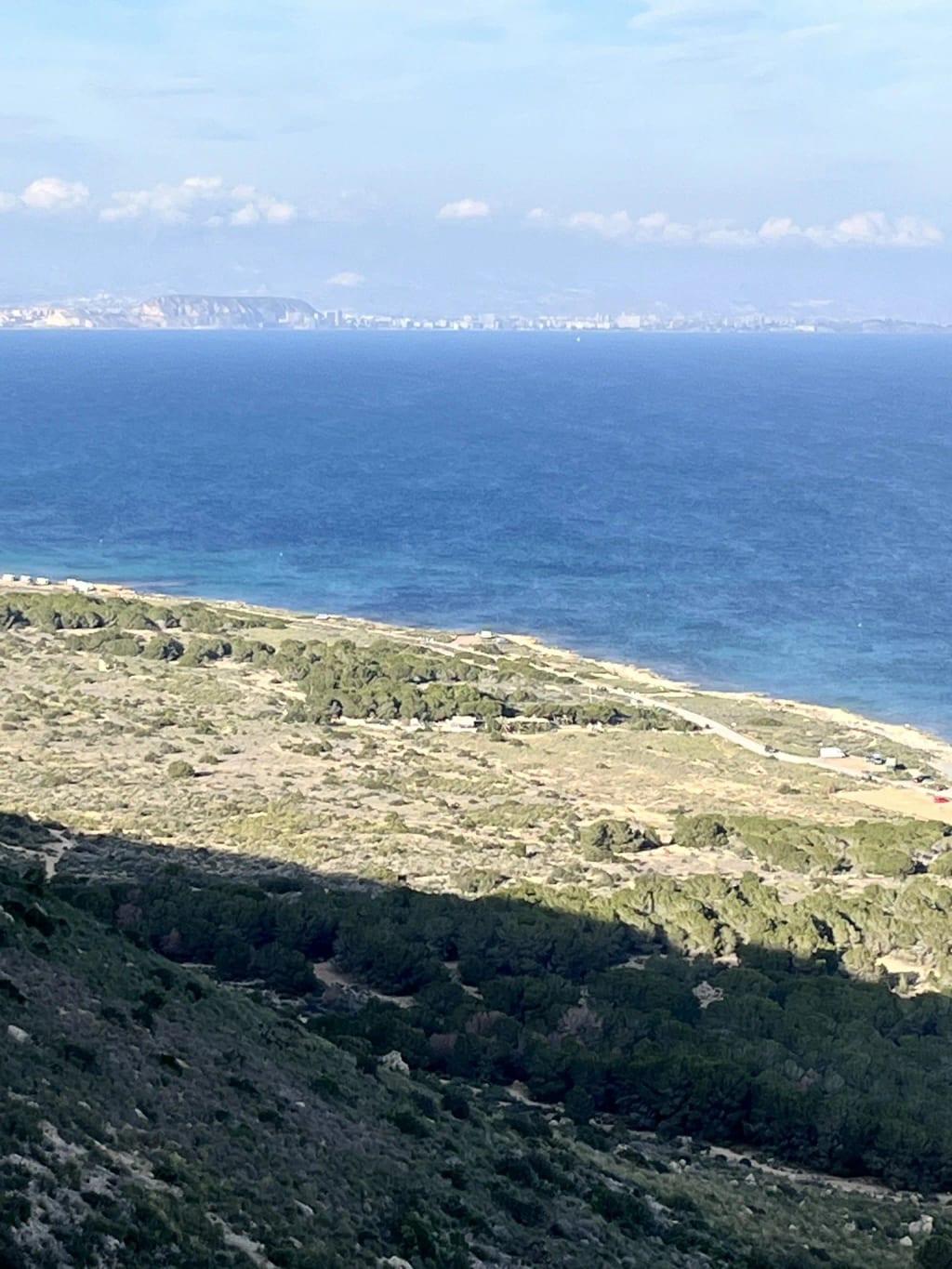
Short trips complete the Gran Alacant plan: Mirador del Faro and Sierra de Santa Pola for views, Santa Pola for harbour culture, Tabarca for a full-day island plan. The municipality documents accessibility work at Mirador del Faro in an official updateand renewed Sierra de Santa Pola signage in a separate update.
Tabarca is an important place for day-trip planning: Turisme Comunitat Valenciana describes it as the only inhabited island in the region and Spain's first marine reserveon the marine reserve page. Boat times remain a live detail, so the dedicated article should be paired with the operator's current information.
For public transport, the most stable Gran Alacant to Alicante corridor is interurban bus line 3 official line 3 timetable. For northern-city beaches and selected attraction zones, plan a transfer to TRAM from central Alicanteofficial TRAM station map.
How to choose the right guide
This guide answers a broader query than a single article because the reader often does not yet know whether they need a place definition, an attraction list, a beach choice, a nature idea or a practical route. We frame Gran Alacant as a decision map: place context first, priority selection second, detailed guide third. The baseline source is Santa Pola municipality, while Brisa Alacant blog posts expand the narrower travel questions.
That structure helps readers because it connects places, sources and next readings clearly. Instead of scattering the reader across isolated tabs, the guide shows that Carabassi, Clot de Galvany andMirador del Faro and Sierra de Santa Pola belong to one travel plan. A reader can start here and then continue with Complete Gran Alacant guide.
The page also separates stable facts from live details. Stable facts include location, official status, heritage context, coast type and relationships between towns or places. Live details include opening times, ticket prices, seasonal services and transport frequency. This guide keeps those live details cautious and points back to primary sources such as Turisme Comunitat Valenciana.
For a guest planning a stay, the value is a shorter decision path. If the goal is orientation, this page and one detailed link may be enough. If the goal is a fuller plan, the guide points to specialist posts: Carabassi Beach for place-level detail andSanta Pola for a wider context.
Reading official sources without mixing entities
The common mistake in local travel planning is mixing a familiar place name with the authority responsible for the information. AroundGran Alacant, one reader phrase can involve different municipalities, regional bodies, protected areas or operators. This is why the copy separates municipal, regional and attraction sources, and every specific detail is attached to a visible citation.
Official pages are not always written around visitor decisions. A municipal beach page may describe bathing-water monitoring, access points or seasonal services, but it will not tell a reader how to structure a day. This guide translates those source facts into choices: when to choose the city, when to choose nature, when to keep the plan light and when to open a detailed article.
Links between guides are as important as external citations. A source confirms a fact; a detailed article explains how to use it. When the guide mentions Carabassi, it should not stop at a citation. It should point to a guide with photos, local notes, planning constraints and practical variants, while avoiding unsupported details.
This makes the page useful as a synthetic starting point for trip planning. It has one clear topic, a linked set of places, primary citations, detailed guides and cautious handling of live details. That is more useful than another short list without context.
Planning a day from intent to reading order
The simplest way to use this page is to choose the type of day first. For a city day, start with urban entities and check the official attraction page. For a nature day, choose places with environmental context and routes. For a beach day, check the character of the coast and seasonal services without assuming that every service is available all year.
The second step is to combine no more than two major goals. For Gran Alacant, a plan that constantly switches between city, park, beach and distant attraction becomes fragile. A better plan has one axis, such as Carabassi plus a slower walk, or Clot de Galvanyplus a light viewpoint stop, with food or rest added afterwards.
The third step is recency checking. Even when a place is stable, exact opening times, prices, staffed services and access rules can change. This guide gives the durable structure and sends live questions to official pages. That protects the reader from a weak plan and protects the site from overconfident copy.
The fourth step is returning to the detailed articles. The guide is the map, while detailed articles carry packing notes, photos, family variants and local observations. In practice, the reader should scan this guide, open two or three detailed links and then check the current official notice for the chosen place.
Variants for families, slower stays and active sightseeing
Families usually need the least fragile plan: a clear goal, an easy way to shorten the day and a simple return path. In this variant, places with clear infrastructure, enough space and nearby alternatives work best. This guide helps filter out ideas that sound attractive but require too much movement or too many live checks.
A slower stay follows a different logic. The goal is not the maximum number of stops, but a rhythm: one main place in the morning, a pause, and one lighter point later. For this reader, Clot de Galvany can be as valuable as the best-known attraction because it adds landscape, context and a less intense alternative.
Active sightseeing needs hierarchy. Choose the place that defines the day, then add supporting places according to the map and season. If the day is built around Mirador del Faro and Sierra de Santa Pola, avoid adding too many secondary goals. Leaving time for sources, photos, weather shifts and simple pauses produces a better experience.
This split also helps the reading path. Family, beach, city and nature articles can all link back to the guide because each answers a narrow need while the guide shows the whole map. That keeps the reading path clear without forcing the same explanation into every post.
How this guide builds trust
A main guide should not be a directory of links. Its job is to explain why those links belong together and how a reader should move through them. For Brisa Alacant, that means combining host experience, local observations, photos, official sources and posts that develop one topic at a time.
The reader receives a practical path: local context, external citations, detailed articles and a clear order for further reading. They do not need to guess whether to start with a beach, a city plan, a budget article or a route. The guide gives the order and keeps live details cautious.
The source Generalitat Valenciana acts as a control point rather than decoration. If a fact is unconfirmed or seasonal, the copy does not pretend to have permanent certainty. That matters in local travel guides, where a wrong distance, service or place name can undermine trust across the whole site.
The best reader experience appears when this guide evolves with the blog. New articles should be assigned to the right topic, and existing detailed posts should point back here. Each update then strengthens the whole structure instead of leaving one more isolated article in a flat archive.
What to check just before travelling
Before turning the plan into a route, open three kinds of source: the official page, the Brisa Alacant guide and a map. The official page carries formal facts, the guide gives user context, and the map helps order the day. None of those is enough alone; together they reduce the chance of a bad plan.
Do not assume that an older article knows current opening times, seasonal services or event availability. This guide deliberately avoids fixed promises where sources can change. Instead, it keeps a durable topic description and points to pages that should be checked directly before the trip.
If time is short, choose one starting article, one detailed article and one official source. For this guide the natural order isComplete Gran Alacant guide, then Carabassi Beach, then Santa Pola municipality. That set gives overview, detail and current verification.
For a longer stay, return to the guide after each article. Individual facts then become a larger map: what belongs together, which places compete for the same day, and which places support each other. That is the difference between a full guide and a plain article list.
How to use this guide before travelling
This guide works best as a starting point before travelling, not as a closed list of places. First choose the kind of day you want: beach, city, nature, family park or slower walk. Then open one or two detailed articles that match that plan.
For Gran Alacant, the main discipline is avoiding too many goals in one day. If you are interested in Carabassi, start with Carabassi Beach. If you want to understand the whole area first, open Complete Gran Alacant guide and compare it with Santa Pola municipality.
Before travelling, separate stable information from seasonal details. Location, landscape and general context are usually stable. Opening times, prices, beach services, bookings and access notices are best checked directly at the source.
If you use the Polish, English and Spanish versions, expect a similar structure: context first, then place choices, then links to detailed articles and sources. The translations are not literal copies, but they lead through the same main travel decisions.
In practice, keep three roles separate. This page organises the choice, a detailed article explains the place, and the official source confirms live details. That keeps the guide readable and prevents small exceptions from overwhelming the route.
The final step before planning is a quick check: does the chosen place fit the season, does the official page show new restrictions, and does the plan combine too many distant points? That caution is more useful than a long attraction list without current verification.
Look at link names as well. A good link says whether the next page is a definition, ranking, route, beach guide, city guide or broader overview. That makes planning faster because the reader does not have to guess what comes after the click.
The second check is source freshness. If an official page adds a seasonal warning, changes a service description or publishes a new notice, treat it as more important than an older blog description. This guide gives direction; the source confirms details.
In practice, the pre-trip cycle can stay simple: choose the topic, open the detailed article, check the current place source and only then arrange the day. That rhythm works for beaches, cities, parks and slower nature routes.
A useful review question is whether the page still separates inspiration from verification. Inspiration is the comparison of day types, reading order and local context. Verification belongs to official sources and detailed articles that can be updated without rewriting the entire guide. If a new paragraph tries to replace the source or promise a live detail, it should become a narrower article note or a more cautious pointer.
The guide should also leave room for other topics. If you are interested in families, remote work, food or transport, treat them as separate reading paths. This page can point to them, but its main job is to organise one travel area.
The best quality signal is whether the reader can choose the next step after scanning the page. If the guide helps them decide which article to open, which source to verify and which live detail should not be treated as permanent, it is doing its job.
A useful planning rule is one main goal and one reserve option. The main goal gives the day its rhythm; the reserve absorbs weather, tiredness, changed opening information or an unplanned stop. That keeps the route flexible instead of forcing the whole group through a schedule that depends on every detail working exactly as expected.
It also helps to compare the needs of the people travelling together. A family with children, a couple looking for a slower walk and an active visitor can use the same sources, but they will choose a different order. This guide helps make those differences visible before opening the more detailed articles.
If the choice still feels too wide after a quick scan, return to one question: should the day be beach-focused, city-focused, nature-focused or family-focused? That answer usually narrows the list to two or three links and one current official source to check before leaving.
A short closing routine also helps: pick one primary goal for the day, one fallback option and one official source to re-check just before leaving. That simple set keeps the plan realistic even when local conditions shift faster than an older article update. It also keeps this guide practical as a decision tool rather than only an inspiration collection.
Gran Alacant FAQ
How is Gran Alacant different from Santa Pola?
Gran Alacant is a residential and leisure area within Santa Pola municipality. Santa Pola is the town and administrative reference point, while Gran Alacant works as a separate base close to Carabassi, Clot de Galvany and viewpoints Turisme Comunitat Valenciana.
Does the TRAM reach Gran Alacant?
Plan Gran Alacant as a bus or road destination. Official Vectalia line 3 links Santa Pola, Gran Alacant, Arenales del Sol, El Altet and Alicante Vectalia. Use TRAM as a network to connect from Alicante city TRAM d’Alacant.
Carabassi or Postiguet: which beach should I choose?
Choose Carabassi when dunes, a natural setting and a Gran Alacant stay are the priority; Turisme Comunitat Valenciana describes it as an Elche beach with sand and dunesPlaya El Carabassi. Postiguet is Alicante city beach, useful during a city-centre day Alicante Turismo.
Where should I start planning a Gran Alacant stay?
Start by choosing the day type: Carabassi and beaches, a Clot de Galvany walk, Mirador del Faro views, Santa Pola or Tabarca. Check seasonal details such as beach services and timetables directly at official sources.
Is Gran Alacant a calmer base than central Alicante?
Yes, if you prefer a base around beaches, nature and Santa Pola rather than a large-city daily rhythm. Alicante remains an easy day-plan target, while Gran Alacant keeps the stay centred on Carabassi, Clot de Galvany and short trips.
Planning a longer Gran Alacant stay?
Use this guide first, then open the beach, neighbourhood and FAQ guides. For stay-specific questions, contact the hosts directly.
Related guides
Sources & References
- Ayuntamiento de Santa Pola — Playas(accessed: 2026-05-06)
- Turisme Comunitat Valenciana — Playa El Carabassi(accessed: 2026-05-06)
- Clot de Galvany — official site(accessed: 2026-05-06)
- Generalitat Valenciana — PNM Clot de Galvany(accessed: 2026-05-06)
- Turisme Comunitat Valenciana — Tabarca Marine Reserve(accessed: 2026-05-06)
- Ayuntamiento de Santa Pola — Mirador del Faro(accessed: 2026-05-06)
- Ayuntamiento de Santa Pola — Sierra de Santa Pola(accessed: 2026-05-06)
Hours, prices and seasonal services can change. Check current information directly at the source.