Costa Blanca vs Costa Brava — Spanish Coast Comparison
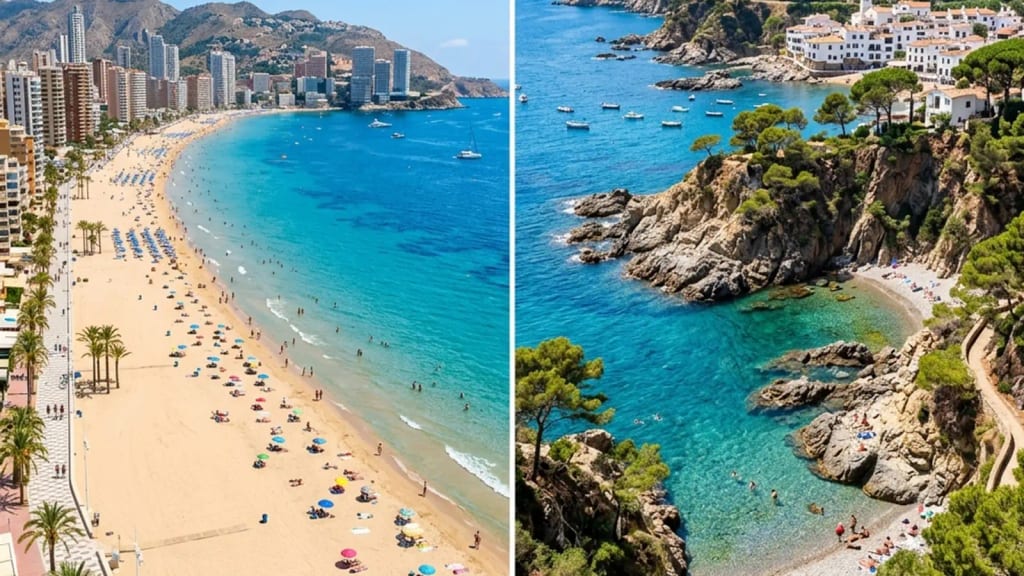
Wondering which coast of eastern Spain to visit for your next trip? While both regions attract millions of visitors, they are fundamentally different. Costa Blanca is a haven of warm waters, endless sunshine, and wide sandy beaches. Costa Brava is a wild, rugged land of scenic rocky coves, pine forests, Catalan history, and fine dining. Below, we analyze their climate, beaches, transit, and budgets.
TL;DR — The Quick Answer
Costa Blanca is warmer and sunnier (over 300 days of sun) with wide, soft golden sandy beaches and shallow waters — ideal for families and budget-conscious travelers. Costa Brava is wilder, cooler (with strong Tramuntana winds), and features pebbles or coarse sand in rocky coves surrounded by cliffs, attracting snorkelers, active hikers, and premium culinary seekers.

By:Rafał Prońko — Host of Brisa Alacant in Gran Alacant on the Costa Blanca.
1. Climate and Temperatures: Protected Microclimate vs Tramuntana Winds
Geography strongly dictates the weather in both regions. Costa Blanca, located in the southeast, enjoys a highly stable climate. Inland mountain ranges (such as Sierra de Aitana) act as a natural barrier against cold northern winds. According to official tourism data from Turismo Costa Blanca, this creates a microclimate with over 300 sunny days a year and mild winters (15–20°C in the day). The sea temperature here ranges from 23°C to 27°C in summer.
In contrast, the northern Costa Brava is cooler and more wind-exposed. It is frequently swept by the Tramuntana — a gusty, dry, and cold wind blowing from the north across the Pyrenees. While it can whip up waves, it famously clears the sky, offering crystal-clear visibility. Due to Pyrenean rivers and marine currents, the sea water on Costa Brava is cooler, averaging 20–25°C in summer, which some swimmers might find refreshing.
2. Beaches: Wide Golden Sands vs Rocky Pine Coves
The beaches in both regions look entirely different. Costa Blanca is famous for long, expansive sandy beaches with fine, soft golden or white sand. The seabed slopes gently, creating safe swimming conditions. A prime example is Carabassi beach, located just 5 minutes by car from the Brisa Alacant apartment. Its golden sand and protected sand dunes make it one of the most beautiful natural beaches on the coast.
Meanwhile, Costa Brava offers a rugged, dramatic coastline. Instead of miles of sand, you will find small, scenic coves (calas) enclosed by cliffs and pine trees that reach the water's edge. The sand here is usually coarser or gravelly, which keeps the sea water incredibly clear. This makes it a paradise for snorkeling and diving. However, the steep paths down to the coves and deep water near the shore make it less practical for families with strollers or very young kids.
At-a-Glance: Costa Blanca vs Costa Brava
| Category | Costa Blanca | Costa Brava |
|---|---|---|
| Landscape & Beaches | Long, sandy, flat terrain | Rugged cliffs, pebbly/coarse coves (calas) |
| Sea Temperature | Warm (23°C – 27°C) | Refreshing (20°C – 25°C) |
| Accommodation & Costs | Affordable, vast rental supply | Premium segment, boutique hotels & villas |
| Transit from Airport | Easy (bus lines from Alicante ALC) | Car recommended (complex bus routes) |
| Gastronomy | Rice specialties (Paella, Arroz a banda) | Mar i muntanya (seafood mixed with meat) |
3. Budgets and Rentals: Mass Convenience vs Premium Privacy
In terms of budget, the two coasts show a clear divide. Costa Blanca is highly affordable. The abundance of rental apartments, bungalows, and resort complexes keeps prices competitive. This makes it easy to find a holiday base. For instance, the Brisa Alacant bungalow in Gran Alacant offers comfortable, fully equipped accommodation, a community pool and free street parking, for stays of up to 10 consecutive days (tourist licence rules).
Costa Brava caters to the premium market. The Catalan government implemented strict zoning laws to prevent high-rise hotels and massive complexes, protecting the natural scenery. As a result, accommodation is scarce and expensive. Renting a historic villa or a room in a boutique hotel in Cadaqués or Begur during July or August regularly costs upwards of 200 € per night, requiring a significantly higher travel budget.
4. Vibe and Gastronomy: Rice Capitals vs Catalan Fine Dining
Costa Blanca is a paradise for rice lovers. While you can find traditional paella, the local specialty is Arroz a banda, which is rice simmered in rich fish stock and served separately with aioli. The atmosphere in towns like Gran Alacant is relaxed, casual, and focused on easy beach days.
Costa Brava offers an artistic, sophisticated vibe, heavily influenced by Catalan culture (it was the home of Salvador Dalí). Its signature culinary style is mar i muntanya (sea and mountain), which combines seafood (like lobster or prawns) with meat, poultry, and wild mushrooms. Traditional meals start with pa amb tomàquet (bread rubbed with tomato and garlic, drizzled with olive oil). The coast is dotted with Michelin-starred restaurants and historic medieval villages just inland.
Verdict: Which Coast is Best for You?
Choose Costa Blanca if:
You prioritize warm sea water, consistent sunshine, and wide sandy beaches with safe swimming (critical for families with young children). You are looking for affordable rentals, a good environment for remote work, and simple airport transfers from Alicante.
Choose Costa Brava if:
You love scenic nature, dramatic cliffs, pine trees by the sea, and active outdoor recreation (hiking the Camí de Ronda, snorkeling in clear coves). You appreciate historic boutique towns, art history, high-end gastronomy, and have a larger travel budget.
Further trip planning
If the Costa Blanca is closer to your preference, start with our Gran Alacant guide and check our apartment in Gran Alacant (stays of up to 10 days). The beach section of your plan can be complemented by our Costa Blanca beaches ranking and Carabassi beach guide.
For a longer visit, it is also worth checking our Costa Blanca weather guide, Costa Blanca with kids ideas, Calpe and Penon de Ifach hiking and Altea guide. Longer scenarios are described in our 11-day stay plan and 30-day workation guide.
Frequently Asked Questions (FAQ)
Where is the sea water warmer — Costa Blanca or Costa Brava?↓
What are the beaches like on both coasts?↓
Where is accommodation cheaper?↓
Is the Brisa Alacant apartment located on the Costa Blanca?↓
Rafał Prońko
Owner of Brisa Alacant
Owner of the Brisa Alacant apartment since 2023, I regularly visit Costa Blanca and know the region from personal experience. All the places described on this blog I have visited myself — photos and tips come from my own visits. I help guests discover the best attractions in the Alicante region.
Read also
Best Beaches on Costa Blanca
Our ranking of the top sandy beaches.
NatureCosta Blanca Weather Guide
Temperatures and seasons through the year.
Travel PlanningCosta Blanca with Kids
Fun family attractions and tips.
Travel PlanningWhat is Gran Alacant?
A brief guide to our local town.
GuidesCosta Blanca attractions guide
Regional pillar for Alicante, Elche, Tabarca, parks and nature.
Practical TipsBrisa Alacant apartment
Complete the stay plan on the apartment offer page.
Ready for a calm week by the sea?
Calendar, prices, terms and FAQ are on the apartment page. Everything included (cleaning, Wi-Fi, electricity, water).